
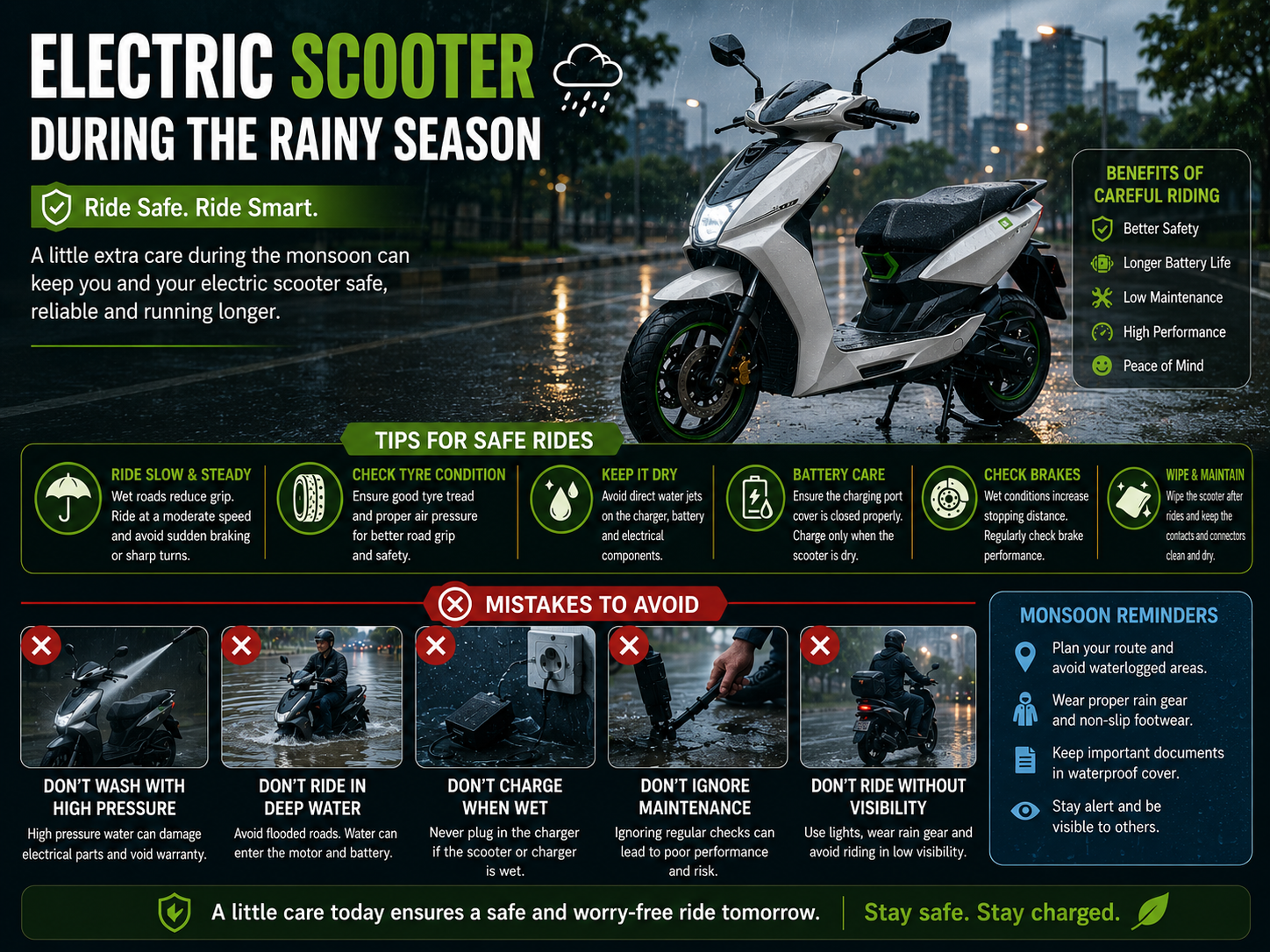
How to Protect Your Electric Scooter During the Rainy Season: Complete Monsoon Care Guide (2026)
Electric Scooter Monsoon Care is essential for keeping your electric scooter safe, reliable, and efficient throughout the rainy season. While modern electric scooters are designed to handle light rain, prolonged exposure to water, mud, and high humidity can affect battery performance, braking efficiency, tire grip, and electrical components. By following the right maintenance practices and riding precautions, you can protect your scooter from costly repairs, improve its lifespan, and enjoy worry-free rides during the monsoon. This guide explains the best ways to maintain your electric scooter, avoid common rainy-season mistakes, and keep it performing at its best.
Electric Scooter Monsoon Care: Why Rainy Season Maintenance Matters
The monsoon season brings slippery roads, waterlogged streets, and increased moisture, making it one of the toughest times for electric scooter owners. Although many modern scooters come with water-resistant components, they are not completely waterproof. Water entering sensitive electrical parts or remaining trapped in hidden areas can gradually lead to corrosion, reduced battery efficiency, and expensive repairs.
Proper Electric Scooter Monsoon Care helps you:
- Protect the battery and charging port
- Improve riding safety on wet roads
- Prevent rust and corrosion
- Extend the life of electrical components
- Maintain consistent performance during rainy weather
A few simple maintenance habits can make a significant difference in your scooter’s long-term reliability.
Electric Scooter Monsoon Care Tips Every Rider Should Follow
Check Your Scooter’s Water Resistance Rating
Before riding in the rain, understand your scooter’s IP (Ingress Protection) rating. Most electric scooters offer splash resistance, but that doesn’t mean they can safely travel through flooded roads. Always follow the manufacturer’s recommendations regarding water exposure.
Avoid Riding Through Flooded Roads
One of the biggest mistakes riders make during the rainy season is attempting to cross waterlogged streets.
Deep water can damage:
- Battery housing
- Motor
- Controller
- Electrical wiring
- Sensors
Whenever possible, choose roads with proper drainage and avoid large puddles.
Protect the Charging Port
The charging port is one of the most sensitive areas of an electric scooter.
For better protection:
- Always close the charging port cover securely.
- Never charge the scooter when the charging port is wet.
- Dry the port completely before plugging in the charger.
This simple habit helps prevent electrical issues and improves charging safety.
Clean Your Scooter After Every Rainy Ride
Rainwater often contains dirt, mud, and road chemicals that stick to your scooter.
After every ride:
- Wipe the scooter with a soft microfiber cloth.
- Remove mud from wheels and underbody.
- Dry exposed metal parts.
- Inspect electrical connectors for moisture.
Regular cleaning prevents rust and keeps your scooter looking new.
Inspect Brakes and Tires Frequently
Wet roads reduce traction and increase stopping distance.
Before every ride:
- Check brake response.
- Inspect tire tread depth.
- Maintain recommended tire pressure.
- Replace worn tires immediately.
Good tires and properly functioning brakes greatly improve safety during monsoon rides.
Store Your Scooter in a Dry Place
Parking your scooter outdoors for long periods exposes it to continuous moisture.
Whenever possible:
- Park indoors.
- Use a waterproof scooter cover.
- Keep the scooter away from damp areas.
- Avoid direct exposure to heavy rainfall.
Proper storage helps protect electrical components and preserves battery performance.
Ride Carefully During Rain
Even a well-maintained scooter requires cautious riding.
Follow these safety practices:
- Reduce speed on wet roads.
- Avoid sudden braking.
- Take wider turns.
- Maintain a safe distance from other vehicles.
- Wear a certified helmet and reflective rain gear.
Safe riding habits are just as important as regular maintenance.
Electric Scooter Monsoon Care: Common Mistakes to Avoid
Many first-time EV owners unknowingly shorten the lifespan of their scooters by making avoidable mistakes.
Avoid these common errors:
- Charging immediately after riding in heavy rain
- Ignoring unusual sounds after water exposure
- Leaving the scooter uncovered outdoors
- Washing the scooter with high-pressure water
- Riding through deep puddles
- Skipping regular servicing during the monsoon
Preventing these mistakes helps reduce maintenance costs and improves long-term reliability.
Frequently Asked Questions (FAQs)
1. Is it safe to ride an electric scooter in the rain?
Yes. Most modern electric scooters can handle light to moderate rain if they have a suitable IP rating. However, avoid flooded roads and heavy water exposure.
2. Can rain damage an electric scooter battery?
The battery is usually sealed, but prolonged exposure to water or moisture can affect electrical connections. Proper Electric Scooter Monsoon Care helps keep the battery protected.
3. Should I charge my electric scooter after riding in the rain?
Wait until the scooter and charging port are completely dry before charging. Charging while moisture is present may damage electrical components.
4. How often should I clean my electric scooter during the rainy season?
It’s best to wipe and inspect your scooter after every rainy ride to remove mud, moisture, and dirt that can cause corrosion.
5. Can I wash my electric scooter with a pressure washer?
No. High-pressure water can force moisture into sensitive electrical components. Use a damp cloth or gentle water spray instead.
6. What is the best way to store an electric scooter during monsoon?
Store it in a dry, covered area and use a waterproof cover if parking outdoors. Avoid leaving the scooter exposed to continuous rain.