
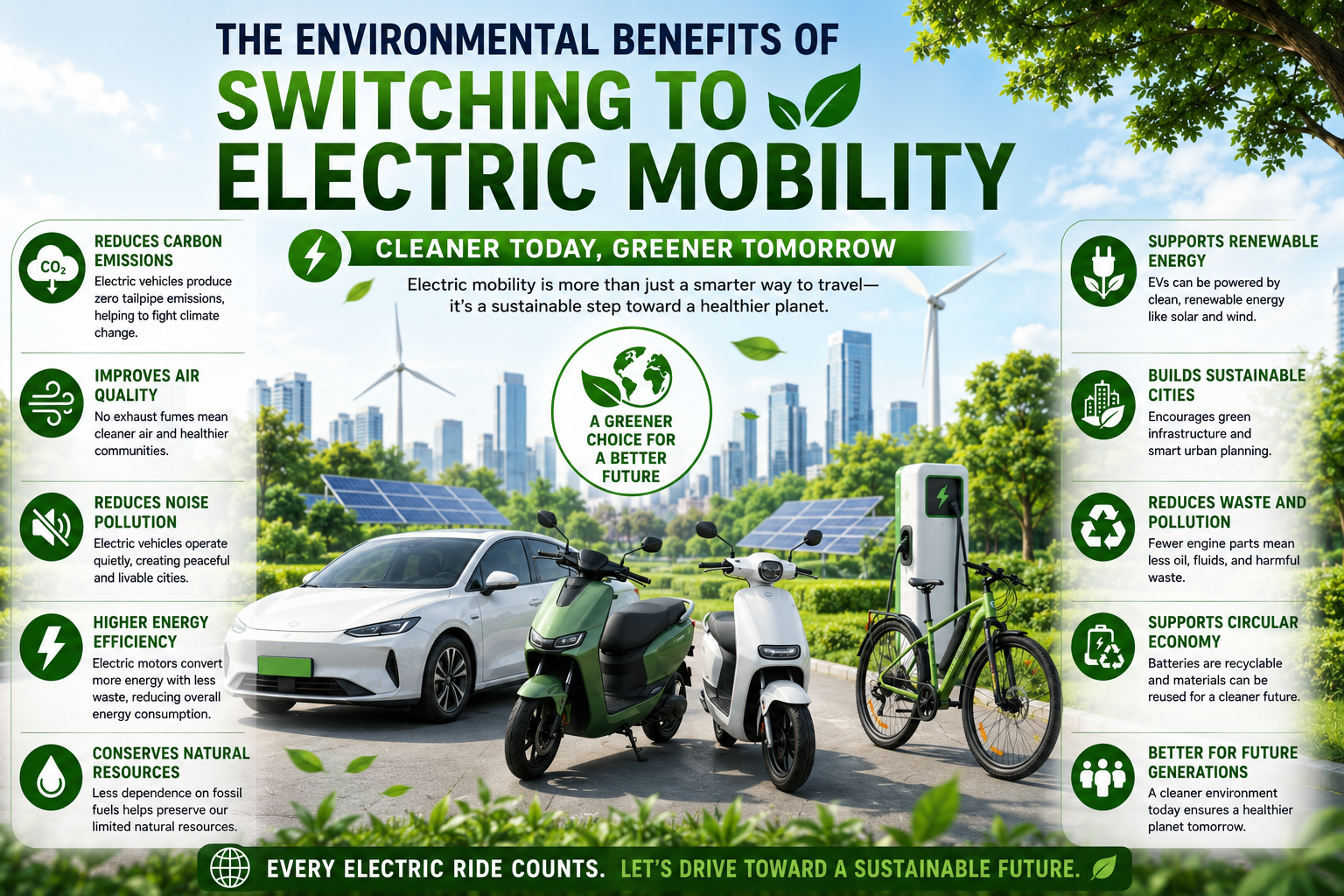
The Environmental Benefits of Switching to Electric Mobility
Environmental Benefits of Electric Mobility are driving the global shift toward cleaner and more sustainable transportation. As the world faces growing challenges such as climate change, air pollution, and rising fuel consumption, the need for eco-friendly travel has never been greater. Cities are becoming more crowded, fossil fuel reserves are diminishing, and greenhouse gas emissions continue to impact the environment. In response, environmental benefits of electric mobility have made electric vehicles a preferred choice for reducing emissions, improving air quality, and building a greener future for generations to come.
Electric mobility includes electric scooters, electric motorcycles, electric cars, electric buses, and other battery-powered vehicles that operate without traditional internal combustion engines. These vehicles are transforming the way people travel by offering cleaner, quieter, and more energy-efficient transportation.
While many people switch to electric scooter to save money on fuel and maintenance, the environmental benefits are equally significant. Every electric vehicle on the road contributes to reducing pollution, conserving natural resources, and supporting a healthier planet.
In this comprehensive guide, we’ll explore how switching to electric mobility benefits the environment and why it plays a crucial role in building a greener future.
What Is Electric Mobility?
Electric mobility refers to transportation powered by electricity instead of petrol or diesel. Energy is stored in rechargeable batteries that power electric motors, eliminating the need for fossil fuels during operation.
Examples include:
- Electric scooters
- Electric motorcycles
- Electric bicycles
- Electric cars
- Electric buses
- Electric delivery vehicles
As battery technology improves and charging infrastructure expands, electric mobility is becoming increasingly accessible worldwide.
Why Sustainable Transportation Matters
Transportation is one of the largest contributors to greenhouse gas emissions globally. Conventional vehicles burn fossil fuels, releasing pollutants such as carbon dioxide (CO₂), nitrogen oxides (NOₓ), and particulate matter into the atmosphere.
These emissions contribute to:
- Climate change
- Poor air quality
- Respiratory illnesses
- Noise pollution
- Environmental degradation
Transitioning to cleaner transportation is essential for protecting both people and the planet.
1. Reduces Carbon Emissions
One of the biggest environmental advantages of electric mobility is the reduction of carbon emissions.
Traditional petrol and diesel vehicles emit carbon dioxide every time they are driven. Electric vehicles produce no tailpipe emissions during operation, helping reduce the overall carbon footprint of transportation.
As electricity generation increasingly shifts toward renewable energy sources such as solar and wind, the environmental impact of electric vehicles continues to improve.
2. Improves Air Quality
Urban areas often experience poor air quality due to vehicle emissions.
Electric vehicles help reduce harmful pollutants such as:
- Nitrogen oxides (NOₓ)
- Carbon monoxide (CO)
- Particulate matter (PM2.5 and PM10)
- Hydrocarbons
Cleaner air contributes to healthier communities by reducing respiratory and cardiovascular health risks.
3. Reduces Noise Pollution
Petrol and diesel engines generate significant engine and exhaust noise.
Electric vehicles operate much more quietly because they use electric motors with fewer moving parts.
Lower noise pollution improves:
- Residential neighborhoods
- School zones
- Hospitals
- Parks
- City centers
Quieter streets create more pleasant urban environments.
4. Increases Energy Efficiency
Electric motors convert a much higher percentage of stored energy into movement than internal combustion engines.
This means:
- Less energy is wasted
- More efficient transportation
- Lower overall energy consumption
Improved efficiency supports sustainable energy use and reduces dependence on fossil fuels.
5. Supports Renewable Energy Integration
Electric mobility works well with renewable energy sources.
Electric vehicles can be charged using electricity generated from:
- Solar power
- Wind energy
- Hydroelectric power
- Other renewable energy systems
As renewable energy adoption grows, electric transportation becomes even cleaner.
6. Conserves Natural Resources
Reducing dependence on petrol and diesel helps conserve finite fossil fuel resources.
Electric mobility encourages greater use of renewable energy while decreasing demand for oil extraction, refining, and transportation.
This contributes to long-term resource sustainability.
7. Reduces Greenhouse Gas Emissions Across Cities
When thousands of people switch to electric mobility, the combined reduction in emissions can significantly improve urban environmental conditions.
Benefits include:
- Lower urban pollution
- Cleaner skies
- Reduced smog formation
- Improved public health
Large-scale adoption has the potential to transform cities into healthier places to live.
8. Encourages Sustainable Urban Planning
Electric mobility supports the development of smart cities by promoting:
- Shared mobility
- Charging infrastructure
- Integrated public transportation
- Dedicated cycling and scooter lanes
- Reduced traffic congestion
These improvements create more sustainable transportation systems.
9. Promotes Innovation in Clean Technology
The rapid growth of electric mobility has accelerated innovation in:
- Battery technology
- Fast charging
- Renewable energy
- Smart energy management
- Recycling systems
Technological progress benefits both consumers and the environment.
10. Reduces Maintenance-Related Environmental Waste
Electric vehicles have fewer mechanical components than petrol vehicles.
This means fewer consumables such as:
- Engine oil
- Oil filters
- Spark plugs
- Transmission fluids
Reducing these materials helps decrease hazardous waste generation.
11. Supports Circular Economy Initiatives
Battery manufacturers increasingly invest in:
- Battery recycling
- Material recovery
- Second-life battery applications
- Sustainable manufacturing
These initiatives reduce waste while recovering valuable materials for future battery production.
12. Encourages Eco-Friendly Consumer Choices
Choosing electric mobility often inspires environmentally responsible habits, including:
- Renewable energy adoption
- Recycling
- Sustainable commuting
- Reduced energy consumption
Individual actions collectively contribute to broader environmental improvements.
Challenges and Ongoing Improvements
Although electric mobility offers many environmental benefits, some challenges remain.
These include:
- Battery manufacturing emissions
- Charging infrastructure expansion
- Responsible battery recycling
- Renewable electricity availability
Fortunately, governments, researchers, and manufacturers continue to invest in cleaner production methods and more sustainable battery technologies.
How Individuals Can Maximize Environmental Benefits
You can increase the positive impact of electric mobility by:
- Charging during off-peak hours where appropriate.
- Using renewable electricity if available.
- Maintaining your vehicle properly.
- Recycling batteries through authorized facilities.
- Riding efficiently to maximize battery performance.
- Combining trips to reduce unnecessary travel.
Small choices can have a meaningful environmental impact.
Frequently Asked Questions
Is electric mobility completely pollution-free?
Electric vehicles produce no tailpipe emissions while driving. However, their overall environmental impact also depends on electricity generation and battery manufacturing. Even so, they generally have a lower environmental footprint than conventional petrol and diesel vehicles over their lifetime.
Do electric vehicles reduce carbon emissions?
Yes. By eliminating tailpipe emissions and becoming increasingly powered by renewable energy, electric vehicles help reduce greenhouse gas emissions.
Are electric vehicle batteries recyclable?
Yes. Many battery components can be recovered and reused through specialized recycling programs, reducing waste and conserving valuable materials.
How does electric mobility improve air quality?
Electric vehicles do not emit exhaust gases during operation, helping reduce pollutants such as nitrogen oxides, carbon monoxide, and particulate matter in urban areas.
Why is electric mobility important for the future?
Electric mobility supports cleaner transportation, reduces dependence on fossil fuels, encourages renewable energy use, and contributes to more sustainable cities.
The Future of Electric Mobility
The future of transportation is becoming increasingly electric. Advances in battery technology, expanding charging networks, government incentives, and growing environmental awareness are accelerating the adoption of electric vehicles worldwide.
As renewable energy becomes more widespread, electric mobility will continue to play a major role in reducing emissions, improving urban air quality, and creating healthier communities. Innovations such as faster charging, longer battery life, smarter energy management, and improved recycling systems will make electric transportation even more sustainable in the years ahead.
Conclusion
Switching to electric mobility is more than just adopting a new mode of transportation—it is a meaningful step toward protecting the environment. By reducing carbon emissions, improving air quality, lowering noise pollution, conserving natural resources, and supporting renewable energy, electric vehicles contribute to a cleaner and healthier future.
Whether you choose an electric scooter for daily commuting or an electric car for family travel, every journey powered by electricity helps reduce environmental impact. As technology continues to evolve and infrastructure expands, electric mobility will become an even more important part of creating sustainable cities and combating climate change.
Making the switch today is not only a smart financial decision but also an investment in a greener future for generations to come.