
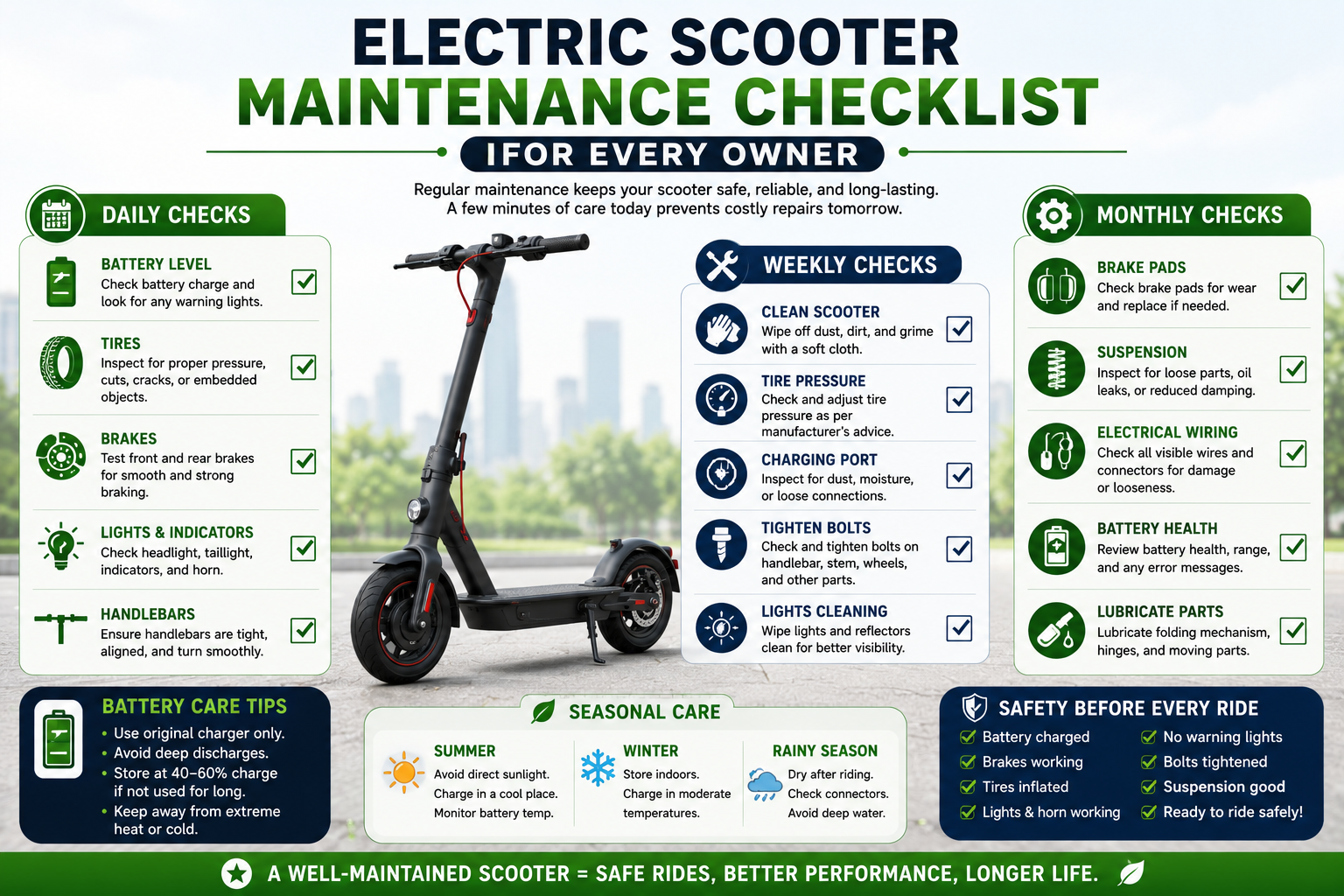
Electric Scooter Maintenance Checklist for Every Owner
Electric Scooter Maintenance is essential for keeping your eScooter safe, efficient, and reliable for everyday use. Electric scooters have become one of the most convenient, affordable, and eco-friendly ways to travel. Whether you use your eScooter for daily commuting, running errands, or weekend rides, regular maintenance helps extend battery life, improve performance, reduce repair costs, and ensure a smooth riding experience. By following a few simple maintenance practices, you can keep your electric scooter in excellent condition for years to come.
Unlike petrol scooters, electric scooters have fewer moving parts and require less maintenance. However, that doesn’t mean they are maintenance-free. Routine inspections and proper care can extend your scooter’s lifespan, improve battery performance, enhance riding safety, and reduce expensive repairs.
Think of maintenance as preventive care. Spending a few minutes checking your scooter every week can save you from unexpected breakdowns and costly component replacements.
This comprehensive maintenance checklist will help every electric scooter owner keep their vehicle in excellent condition throughout the year.
Why Electric Scooter Maintenance Matters?
Proper maintenance offers several long-term benefits:
- Improves battery life
- Increases riding range
- Enhances safety
- Prevents unexpected breakdowns
- Reduces repair expenses
- Maintains resale value
- Ensures smoother performance
A well-maintained scooter delivers a better riding experience every day.
Daily Electric Scooter Maintenance Checklist
Before every ride, spend two to three minutes inspecting your scooter.
Check Battery Level
Ensure the battery has enough charge for your planned trip.
Look for:
- Battery percentage
- Warning lights
- Charging errors
- Unusual battery behavior
Never start a long ride with a critically low battery.
Inspect Tires
Check for:
- Proper air pressure
- Cuts
- Cracks
- Nails or sharp objects
- Uneven tread wear
Healthy tires improve grip, braking, and battery efficiency.
Test the Brakes
Before moving, test both front and rear brakes.
Ensure:
- Smooth braking
- No unusual sounds
- Proper stopping power
- Firm brake lever feel
Never ride if the brakes feel weak.
Verify Lights and Indicators
Check:
- Headlight
- Taillight
- Brake light
- Turn indicators
- Horn
Good visibility helps keep you and others safe.
Inspect the Handlebars
Confirm that the handlebars:
- Are properly aligned
- Turn smoothly
- Have no excessive play
- Feel secure
Loose steering can be dangerous.
Weekly Electric Scooter Maintenance Checklist
Perform a more detailed inspection once a week.
Clean the Scooter
Remove:
- Dust
- Mud
- Road grime
- Leaves
- Debris
Use:
- Soft microfiber cloth
- Mild soap solution
- Soft brush
Avoid pressure washing, especially around electrical components.
Inspect Charging Port
Look for:
- Dust
- Moisture
- Loose connections
- Bent pins
Keep the charging cover securely closed when not in use.
Check Tire Pressure
Use a tire pressure gauge and follow the manufacturer’s recommended PSI.
Correct pressure improves:
- Range
- Handling
- Tire lifespan
- Ride comfort
Tighten Bolts
Inspect bolts on:
- Handlebars
- Mirrors
- Brake levers
- Suspension
- Mudguards
- Seat (if applicable)
Road vibrations can gradually loosen fasteners.
Clean Reflectors and Lights
Dirty lights reduce visibility.
Wipe them clean regularly for maximum brightness.
Monthly Electric Scooter Maintenance Checklist
Every month, inspect the scooter more thoroughly.
Examine Brake Pads
Check for:
- Excessive wear
- Uneven wear
- Cracks
- Noise
Replace worn brake pads promptly.
Inspect Suspension
Look for:
- Oil leaks
- Unusual noises
- Loose mounts
- Reduced shock absorption
Healthy suspension improves comfort and stability.
Check Electrical Wiring
Inspect visible wiring for:
- Frayed insulation
- Loose connectors
- Corrosion
- Damage
Never attempt major electrical repairs without proper expertise.
Review Battery Health
Many scooters provide battery information through:
- Mobile apps
- Dashboard displays
- Battery Management Systems (BMS)
Monitor:
- Charging cycles
- Estimated range
- Battery temperature
- Error messages
Lubricate Moving Parts
If recommended by the manufacturer, lubricate:
- Folding mechanisms
- Kickstand
- Hinges
- Mechanical joints
Avoid applying lubricant near brake components.
Seasonal Maintenance Checklist
Changes in weather can affect your scooter.
Summer
- Avoid prolonged direct sunlight.
- Charge in a cool location.
- Monitor battery temperature.
Winter
- Store indoors.
- Charge at moderate temperatures.
- Allow the battery to warm slightly before riding if exposed to cold conditions.
Rainy Season
- Dry the scooter after riding.
- Inspect electrical connectors.
- Clean mud from tires and suspension.
- Avoid flooded roads.
Battery Maintenance Checklist
The battery is the most valuable part of your scooter.
Follow these best practices:
- Use only the original charger.
- Recharge before the battery becomes critically low.
- Avoid constant deep discharges.
- Store at approximately 40–60% charge for long periods.
- Keep the battery away from extreme temperatures.
- Never use damaged chargers or cables.
Good battery care can extend its lifespan by several years.
Tire Maintenance Checklist
Inspect for:
- Correct pressure
- Tread depth
- Sidewall cracks
- Embedded objects
- Uneven wear
Replace tires when they no longer provide adequate grip.
Brake Maintenance Checklist
Check:
- Brake pad thickness
- Brake disc condition
- Cable tension (if applicable)
- Hydraulic fluid level (for hydraulic systems)
- Braking response
Safe brakes are essential for every ride.
Motor Maintenance
Electric motors require minimal maintenance, but regular inspection is still important.
Watch for:
- Unusual noises
- Vibration
- Reduced power
- Error codes
- Overheating
If performance changes noticeably, have the scooter inspected by an authorized service center.
Storage Checklist
When storing your scooter:
- Clean it thoroughly.
- Charge the battery to 40–60%.
- Store indoors.
- Cover the scooter.
- Keep away from moisture.
- Recharge periodically if stored for an extended period.
Proper storage protects both the battery and the frame.
Safety Inspection Checklist
Before long rides:
✔ Battery charged
✔ Tires inflated
✔ Brakes working
✔ Lights functioning
✔ Horn operational
✔ Mirrors adjusted
✔ Suspension inspected
✔ Bolts tightened
✔ Charging cable removed
✔ Dashboard free of warning lights
Common Maintenance Mistakes
Avoid these errors:
- Ignoring low tire pressure
- Using non-approved chargers
- Pressure washing electrical parts
- Delaying brake replacement
- Leaving the battery completely discharged
- Skipping routine inspections
- Ignoring warning messages
Small issues can quickly become expensive repairs.
Maintenance Schedule at a Glance
| Task | Frequency |
|---|---|
| Check battery | Before every ride |
| Inspect tires | Before every ride |
| Test brakes | Before every ride |
| Clean scooter | Weekly |
| Check tire pressure | Weekly |
| Tighten bolts | Weekly |
| Inspect brake pads | Monthly |
| Review battery health | Monthly |
| Inspect suspension | Monthly |
| Professional service | As recommended by the manufacturer |
Frequently Asked Questions
How often should I maintain my electric scooter?
Perform basic safety checks before every ride, clean and inspect the scooter weekly, and carry out more detailed maintenance monthly. Follow the manufacturer’s service schedule for professional inspections.
Does an electric scooter require engine maintenance?
No. Electric scooters do not have internal combustion engines, so there is no need for engine oil changes, spark plug replacements, or fuel system maintenance.
Can I wash my electric scooter?
Yes, but avoid high-pressure water. Use a soft cloth, mild soap, and minimal water around electrical components.
How can I make my battery last longer?
Use the original charger, avoid deep discharges, charge in moderate temperatures, and store the battery at about 40–60% if the scooter will not be used for an extended period.
Why is tire pressure important?
Correct tire pressure improves handling, braking, ride comfort, battery efficiency, and tire longevity.
Conclusion
A well-maintained electric scooter delivers better performance, greater safety, and a longer lifespan. By following a consistent maintenance routine, you can keep your scooter running efficiently while reducing the risk of costly repairs and unexpected breakdowns.
Simple tasks such as checking tire pressure, inspecting the brakes, cleaning the scooter, monitoring battery health, and tightening loose bolts require only a few minutes but provide significant long-term benefits. Combined with regular professional servicing and proper storage, these habits will help protect your investment and ensure dependable performance for years to come.
Whether you ride every day or only on weekends, this maintenance checklist provides a practical roadmap for keeping your electric scooter in excellent condition and ready for every journey.