
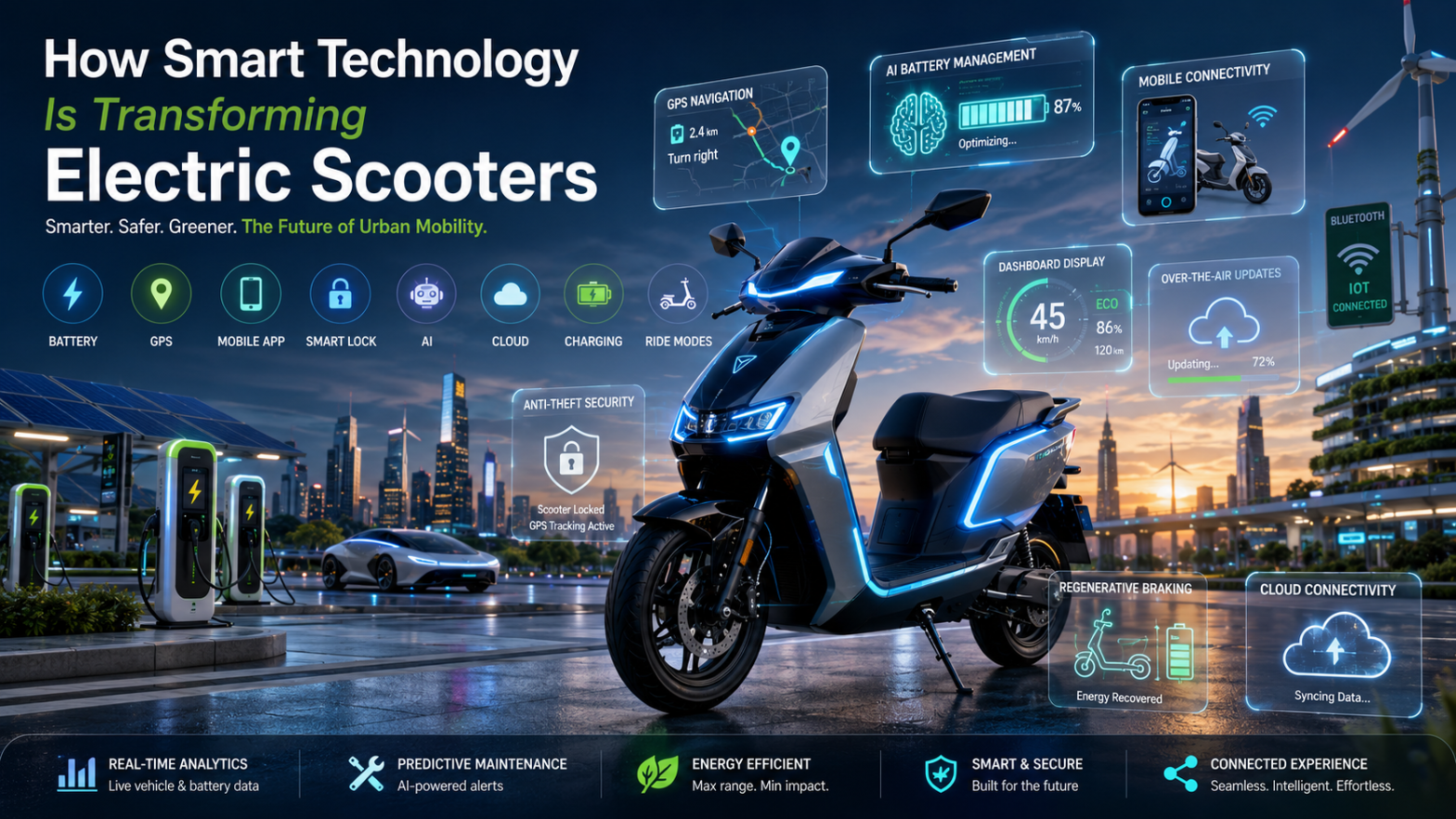
How Smart Technology Is Transforming Electric Scooters
Smart Electric Scooters are transforming the future of personal transportation with intelligent features that enhance safety, convenience, and performance. Electric scooters have rapidly evolved from simple personal transportation devices into connected vehicles powered by advanced technology. Today’s electric scooters are no longer just about getting from one place to another—they offer smart features such as GPS tracking, app connectivity, intelligent battery management, and enhanced security, delivering a more efficient and enjoyable riding experience.
From smartphone connectivity and GPS navigation to AI-powered battery management and over-the-air software updates, smart technology is changing how riders interact with their vehicles. Modern eScooters can monitor their own health, provide real-time performance data, protect against theft, and even optimize energy consumption.
As cities become smarter and electric mobility continues to grow, these technological innovations are making electric scooters more reliable, user-friendly, and sustainable than ever before.
In this guide, we’ll explore how smart technology is transforming electric scooters and why these innovations are shaping the future of urban transportation.
The Rise of Smart Electric Scooters
The demand for connected mobility solutions has encouraged manufacturers to integrate digital technologies into electric scooters.
Today’s premium electric scooters often include:
- Smartphone integration
- GPS tracking
- Bluetooth connectivity
- Smart dashboards
- Mobile applications
- AI-powered battery management
- Cloud-based diagnostics
- Anti-theft systems
These features make riding safer, easier, and more enjoyable.
1. Smartphone Connectivity
One of the biggest innovations is smartphone integration.
Using a dedicated mobile app, riders can:
- Check battery status
- Monitor riding range
- View trip history
- Lock and unlock the scooter
- Receive maintenance alerts
- Adjust riding modes
- Update firmware
Smartphone connectivity gives riders complete control at their fingertips.
2. GPS Tracking and Navigation
Built-in GPS technology offers multiple benefits.
Navigation
GPS helps riders:
- Find the fastest routes
- Avoid traffic congestion
- Locate charging stations
- Plan efficient trips
Theft Recovery
If the scooter is stolen, GPS tracking can help owners identify its location and assist in recovery efforts where supported.
3. Intelligent Battery Management Systems (BMS)
The battery is the most valuable component of an electric scooter.
Modern Battery Management Systems monitor:
- Battery temperature
- Voltage
- Charging status
- Cell balance
- Energy consumption
- Battery health
These systems help maximize battery lifespan while improving safety and performance.
4. Over-the-Air (OTA) Software Updates
Many smart scooters now support wireless software updates.
OTA updates can improve:
- Motor performance
- Battery optimization
- Security features
- Ride modes
- User interface
- Bug fixes
Instead of visiting a service center, many improvements can be installed directly through the internet.
5. Smart Anti-Theft Features
Modern electric scooters include advanced security technologies such as:
- Remote locking
- Alarm systems
- GPS location tracking
- Motion detection
- Digital key authentication
- Geofencing
These features provide greater peace of mind for owners.
6. Digital Dashboards
Traditional analog displays have been replaced by smart digital dashboards.
Information typically includes:
- Speed
- Battery percentage
- Remaining range
- Riding mode
- Odometer
- Trip meter
- Error notifications
- Navigation prompts
Bright, easy-to-read displays improve rider awareness.
7. Multiple Riding Modes
Smart controllers allow riders to select different performance modes.
Examples include:
Eco Mode
- Maximum battery efficiency
- Reduced acceleration
- Longer riding range
Normal Mode
- Balanced performance
- Everyday commuting
Sport Mode
- Faster acceleration
- Higher power output
- More responsive riding
Riders can choose the mode that best suits their journey.
8. Artificial Intelligence (AI)
Artificial intelligence is beginning to play an important role in electric mobility.
AI systems can:
- Optimize battery usage
- Predict maintenance needs
- Analyze riding behavior
- Improve energy efficiency
- Enhance safety systems
As AI technology advances, electric scooters will become even smarter.
9. Cloud-Based Diagnostics
Many connected scooters continuously collect operational data.
Manufacturers can analyze this information to identify:
- Battery issues
- Motor performance
- Software errors
- Component wear
- Maintenance requirements
Cloud diagnostics help reduce downtime and improve reliability.
10. Smart Charging
Modern charging systems include intelligent features such as:
- Charging optimization
- Temperature monitoring
- Automatic charging protection
- Battery balancing
- Charging history
Smart charging improves battery longevity while reducing energy waste.
11. Advanced Lighting Systems
Technology has significantly improved scooter lighting.
Modern systems may include:
- Automatic headlights
- Adaptive lighting
- Daytime running lights
- Smart brake lights
- Turn indicators
Improved visibility enhances rider safety.
12. Bluetooth Connectivity
Bluetooth enables seamless communication between the scooter and nearby devices.
Common features include:
- Mobile app pairing
- Music controls (on supported models)
- Firmware updates
- Ride statistics
- User authentication
Wireless connectivity simplifies scooter management.
13. Regenerative Braking Technology
Many electric scooters recover some energy during braking.
Benefits include:
- Increased battery efficiency
- Extended riding range
- Reduced brake wear
- Improved energy management
Although the energy recovered is modest, it contributes to overall efficiency.
14. Geofencing
Geofencing allows owners or fleet operators to define virtual boundaries.
If the scooter leaves the designated area, the system can:
- Send alerts
- Limit performance
- Record location
- Improve fleet management
This feature is especially useful for rental and shared mobility services.
15. Predictive Maintenance
Instead of waiting for components to fail, smart systems analyze data to predict maintenance needs.
Alerts may notify riders about:
- Brake inspections
- Battery servicing
- Tire replacement
- Software updates
- Component wear
Preventive maintenance reduces repair costs and improves safety.
Benefits of Smart Technology
Modern electric scooters provide numerous advantages:
- Enhanced rider safety
- Improved battery life
- Better navigation
- Lower maintenance costs
- Increased convenience
- Stronger theft protection
- Personalized riding experience
- Improved energy efficiency
Technology is making electric scooters smarter and more dependable.
Challenges of Smart Technology
Despite the benefits, some challenges remain:
- Higher purchase price
- Software compatibility
- Cybersecurity considerations
- Dependence on mobile connectivity
- Learning curve for new users
Manufacturers continue to improve these systems each year.
The Future of Smart Electric Scooters
The next generation of electric scooters is expected to introduce even more advanced technologies, including:
- AI-powered autonomous safety features
- Vehicle-to-vehicle communication
- Voice assistants
- Smart traffic integration
- Enhanced battery analytics
- Faster wireless connectivity
- Improved predictive maintenance
- Greater renewable energy integration
As smart cities continue to develop, electric scooters will become an even more connected part of urban transportation networks.
Frequently Asked Questions
What makes an electric scooter “smart”?
A smart electric scooter includes connected technologies such as mobile app integration, GPS tracking, Bluetooth, intelligent battery management, software updates, and digital diagnostics.
Can I control my scooter with a smartphone?
Many modern electric scooters allow users to monitor battery status, lock or unlock the scooter, view ride history, change riding modes, and receive maintenance alerts through a companion mobile app.
Do smart features improve battery life?
Yes. Intelligent Battery Management Systems help optimize charging, monitor battery health, and improve long-term performance.
Are smart electric scooters more secure?
Many models include GPS tracking, remote locking, motion detection, alarms, and digital authentication, offering improved protection against theft.
Are software updates important?
Yes. Over-the-air updates can enhance performance, fix bugs, improve security, and introduce new features without requiring a visit to a service center.
Conclusion
Smart technology is transforming electric scooters into intelligent, connected mobility solutions that go far beyond basic transportation. Features such as GPS tracking, AI-powered battery management, smartphone integration, cloud diagnostics, and predictive maintenance are improving safety, efficiency, convenience, and overall ownership experience.
As technology continues to evolve, electric scooters will become even smarter, offering enhanced connectivity, better performance, and seamless integration with future smart cities. For riders, this means safer journeys, lower maintenance costs, improved energy efficiency, and a more personalized riding experience.
Whether you’re purchasing your first electric scooter or upgrading to a premium model, choosing a scooter with smart technology can provide long-term value and prepare you for the future of urban mobility.