
Can You Ride an Electric Scooter in the Rain?
Electric Scooter in Rain riding is possible, but it requires the right safety precautions and an understanding of your scooter’s capabilities. Electric scooters have become a popular choice for daily commuting because they are affordable, eco-friendly, and easy to ride. However, one question that many riders ask is, “Can you ride an electric scooter in the rain?” The answer isn’t a simple yes or no. It depends on several factors, including your scooter’s water-resistance (IP) rating, the intensity of the rain, road conditions, and how well you maintain your scooter. By understanding these factors, you can make safer decisions and protect your electric scooter from unnecessary damage.
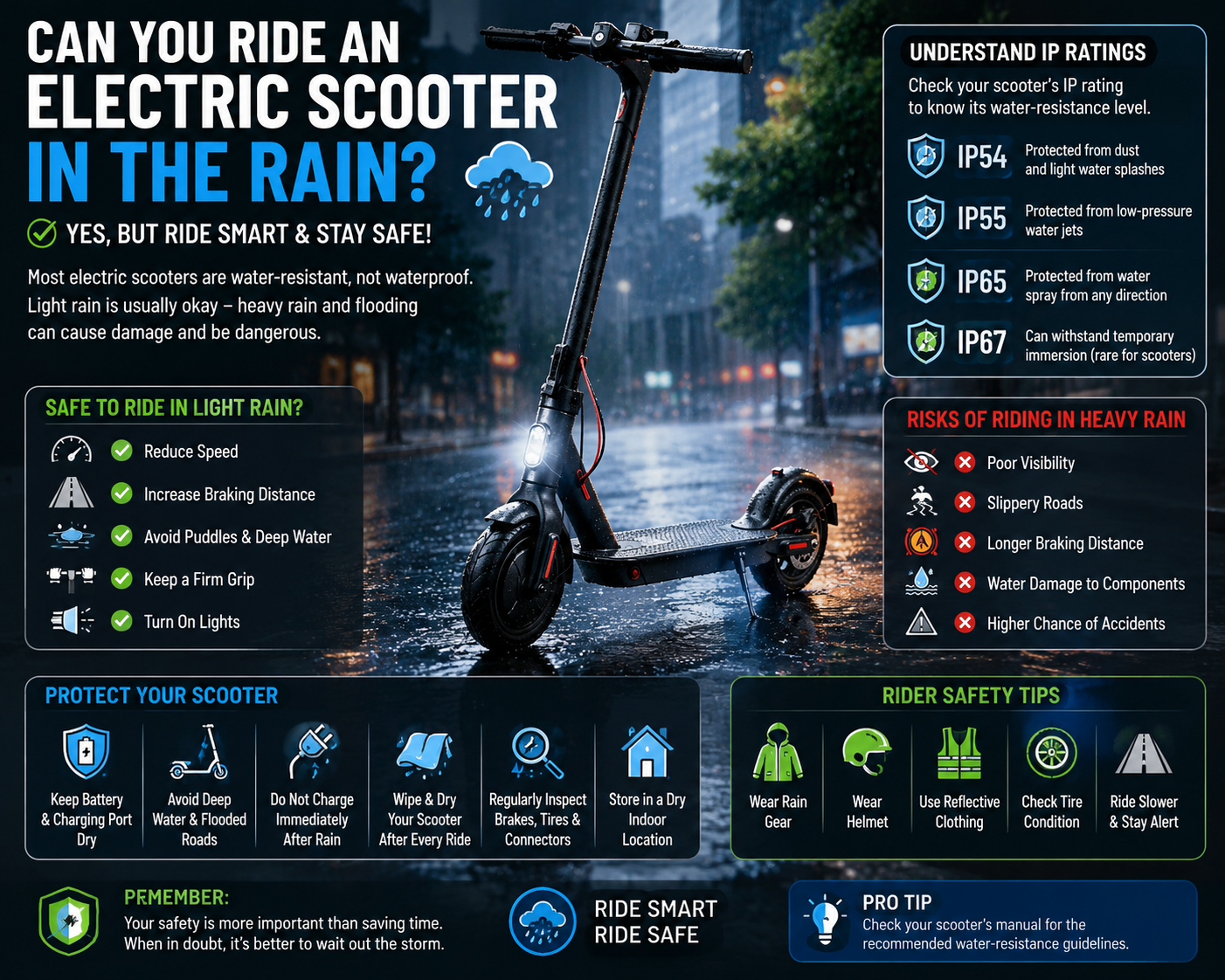
Most modern electric scooters are designed to handle light rain and occasional wet roads, but they are not completely waterproof. Riding in heavy rain, through deep puddles, or during floods can damage electrical components, reduce braking efficiency, and increase the risk of accidents.
This comprehensive guide explains everything you need to know about riding an electric scooter in wet weather, including safety precautions, maintenance tips, and how to protect your investment.
Are Electric Scooters Waterproof?
The biggest misconception among new riders is that electric scooters are completely waterproof.
The reality is that most electric scooters are water-resistant, not waterproof.
Water-resistant means they can tolerate small amounts of moisture, while waterproof means they can be fully submerged without damage. Very few consumer electric scooters are designed for complete waterproof protection.
Before riding in wet weather, always check your scooter’s official specifications.
Understanding IP Ratings
Manufacturers often indicate water resistance using an IP (Ingress Protection) rating.
Common ratings include:
| IP Rating | Protection Level |
|---|---|
| IP54 | Protected from dust and light water splashes |
| IP55 | Protected against low-pressure water jets |
| IP65 | Better protection against water spray |
| IP67 | Temporary immersion protection (rare for scooters) |
A higher IP rating generally offers better protection, but it does not mean you should intentionally ride through flooded roads or deep water.
Can You Ride in Light Rain?
Yes.
If your scooter has an appropriate IP rating and the rain is light, it is generally safe to continue riding while taking extra precautions.
However, you should:
- Reduce your speed.
- Increase braking distance.
- Avoid sudden acceleration.
- Stay away from large puddles.
- Keep both hands firmly on the handlebars.
Even in light rain, visibility and traction decrease significantly.
Is It Safe to Ride in Heavy Rain?
Heavy rain is not recommended.
Reasons include:
- Reduced visibility
- Slippery roads
- Poor tire grip
- Longer braking distance
- Increased electrical exposure
- Hidden potholes under standing water
If heavy rain begins during your ride, the safest option is to stop at a sheltered location until conditions improve.
Why Wet Roads Are More Dangerous
Rain changes road conditions dramatically.
Common hazards include:
- Oil mixed with rainwater
- Wet paint markings
- Metal covers
- Loose gravel
- Mud
- Leaves
- Standing water
These surfaces become extremely slippery, especially for electric scooters with relatively small tires.
How Rain Affects Braking
Brakes require more stopping distance on wet roads.
Whether your scooter has:
- Disc brakes
- Drum brakes
- Electronic braking
- Regenerative braking
You should always begin braking earlier and apply the brakes gradually.
Sudden braking may cause the wheels to skid.
Protecting the Battery
The battery is the most valuable component of your electric scooter.
Although batteries are usually enclosed within sealed compartments, excessive moisture can still create problems over time.
To protect the battery:
- Never charge a wet scooter.
- Dry the charging port before connecting the charger.
- Use only the original charger.
- Inspect the charging cover regularly.
- Avoid prolonged exposure to rain.
Avoid Riding Through Deep Water
Even scooters with higher IP ratings should never be ridden through:
- Flooded streets
- Deep puddles
- Streams
- Waterlogged roads
Water can enter:
- Motor housing
- Bearings
- Controller
- Battery compartment
- Electrical connectors
Repairing water damage is often expensive and may not be covered under warranty.
Tire Safety in Wet Conditions
Proper tire maintenance becomes even more important in rainy weather.
Before riding:
- Check tire pressure.
- Inspect tread depth.
- Look for cuts or cracks.
- Remove embedded debris.
Good tire condition improves traction and reduces the risk of slipping.
Wear Proper Rain Gear
Protect yourself as well as your scooter.
Recommended equipment includes:
- Waterproof jacket
- Waterproof gloves
- Reflective vest
- Helmet with visor
- Waterproof shoes
Bright-colored clothing also improves visibility for other road users.
Increase Your Visibility
Rain makes it harder for drivers to see scooter riders.
Always:
- Turn on your headlights.
- Use rear lights.
- Wear reflective clothing.
- Signal your turns clearly.
- Avoid riding in drivers’ blind spots.
Being visible is one of the most effective ways to stay safe.
Ride More Slowly
High speeds increase the risk of losing control.
Reduce your speed because:
- Tires have less grip.
- Braking distances increase.
- Obstacles are harder to see.
- Reaction time becomes more important.
Smooth riding is the safest approach.
Avoid Sudden Movements
When roads are wet:
Avoid:
- Sharp turns
- Hard braking
- Rapid acceleration
- Sudden lane changes
Instead:
- Accelerate gently.
- Brake progressively.
- Turn smoothly.
These techniques help maintain traction.
What to Do After Riding in the Rain
Proper maintenance after a wet ride helps prevent long-term damage.
Clean the Scooter
Remove:
- Mud
- Sand
- Dirt
- Road salt (where applicable)
Dry Thoroughly
Use a microfiber cloth to dry:
- Frame
- Wheels
- Brakes
- Charging port
- Display
- Lights
Inspect for Moisture
Check:
- Charging cover
- Connectors
- Brake components
- Tire condition
Never store the scooter while it is still wet.
Charging After Rain
One of the biggest mistakes riders make is charging immediately after riding in wet conditions.
Always:
- Dry the charging port completely.
- Wait until moisture has evaporated.
- Inspect the charging cable.
- Use a dry indoor charging location.
Charging a wet scooter can damage electrical components.
Common Mistakes to Avoid
Many riders unknowingly increase the risk of damage.
Avoid:
- Riding through floods.
- Pressure washing the scooter.
- Ignoring water inside the charging port.
- Charging immediately after rain.
- Riding too fast on wet roads.
- Using worn tires.
- Leaving the scooter outdoors in heavy rain.
Small precautions can prevent costly repairs.
Benefits of Waiting for Better Weather
Sometimes the safest decision is simply to delay your ride.
Benefits include:
- Better road traction
- Improved visibility
- Reduced accident risk
- Lower chance of electrical damage
- Longer scooter lifespan
Safety should always come before convenience.
Frequently Asked Questions
Can electric scooters get wet?
Most electric scooters are designed to handle light rain and water splashes, but they are not completely waterproof. Always follow the manufacturer’s recommendations regarding water exposure.
Can I wash my electric scooter?
Yes, but use a damp cloth and mild cleaning solution. Avoid pressure washers, as they can force water into electrical components.
What is an IP rating?
An IP (Ingress Protection) rating indicates how well a device is protected against dust and water. A higher rating generally provides better resistance to environmental exposure.
Can rain damage the battery?
While batteries are usually sealed, prolonged exposure to heavy rain or flooding can allow moisture to reach sensitive electrical components. Always keep the charging port dry and inspect your scooter after riding in wet conditions.
Should I ride through puddles?
No. Even shallow puddles can hide potholes or allow water to enter critical components. It is best to avoid them whenever possible.
Conclusion
So, can you ride an electric scooter in the rain? Yes—but only under the right conditions. Light rain is generally manageable for most water-resistant electric scooters, provided you ride carefully, reduce your speed, avoid deep water, and follow proper maintenance practices afterward.
Heavy rain, flooded roads, and standing water present significant safety and mechanical risks that are best avoided. Understanding your scooter’s IP rating, keeping your battery and charging port dry, maintaining your tires and brakes, and wearing appropriate protective gear will help you ride safely when weather conditions change.
By following these simple precautions, you can protect your electric scooter, reduce the risk of accidents, and enjoy reliable performance throughout every season.