
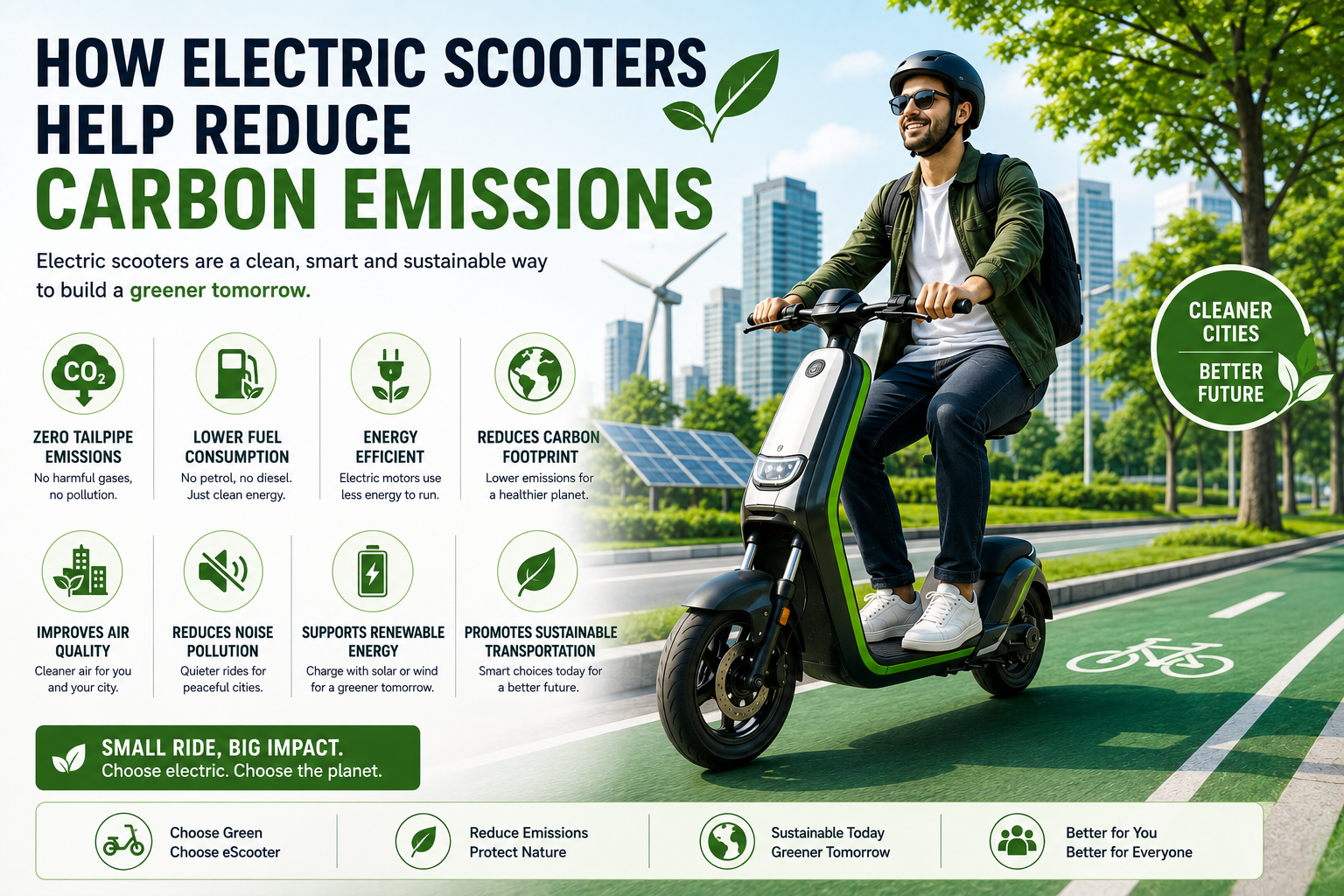
How Electric Scooters Help Reduce Carbon Emissions
Electric Scooter Environmental Benefits play a significant role in reducing the impact of transportation on the environment. As cities continue to expand and the number of vehicles on the road increases, carbon emissions have become one of the biggest environmental challenges of our time. Transportation is a major contributor to greenhouse gas emissions, with petrol and diesel vehicles releasing carbon dioxide (CO₂), nitrogen oxides, and other pollutants into the atmosphere every day. These emissions contribute to climate change, poor air quality, and health problems for millions of people worldwide.
Electric scooters (eScooters) are emerging as one of the most effective solutions for reducing carbon emissions in urban areas. Powered by rechargeable batteries instead of fossil fuels, they produce zero tailpipe emissions and consume significantly less energy than conventional vehicles. As governments invest in clean energy and sustainable transportation, electric scooters are becoming an essential part of greener cities.
In this article, we’ll explore how electric scooters help reduce carbon emissions, why they are environmentally friendly, and how switching to an eScooter can make a positive impact on both your daily commute and the planet.
Understanding Carbon Emissions
Carbon emissions primarily refer to carbon dioxide (CO₂) released into the atmosphere when fossil fuels such as petrol, diesel, and coal are burned. Transportation is one of the largest sources of these emissions.
Every time a petrol scooter or motorcycle is driven, it releases harmful gases that contribute to:
- Global warming
- Climate change
- Air pollution
- Smog formation
- Respiratory illnesses
- Environmental degradation
Reducing emissions from transportation is essential for creating healthier and more sustainable communities.
Why Transportation Needs to Change
Urban populations continue to grow rapidly, increasing the demand for personal transportation.
Traditional fuel-powered vehicles consume large amounts of fossil fuels and generate significant pollution.
Challenges include:
- Rising fuel consumption
- Traffic congestion
- Greenhouse gas emissions
- Poor urban air quality
- Noise pollution
- Increasing fuel costs
Electric scooters address many of these challenges by offering a cleaner and more energy-efficient alternative.
1. Zero Tailpipe Emissions
One of the greatest environmental advantages of electric scooters is that they produce zero tailpipe emissions.
Unlike petrol scooters, electric scooters do not burn fuel while operating.
This means they release:
- No carbon dioxide (CO₂)
- No nitrogen oxides (NOx)
- No carbon monoxide (CO)
- No particulate matter
Cleaner transportation directly contributes to better air quality, especially in densely populated cities.
2. Reduced Dependence on Fossil Fuels
Petrol and diesel are finite resources that contribute significantly to global carbon emissions.
Electric scooters reduce dependence on fossil fuels by using electricity instead.
As more electricity is generated from renewable energy sources such as solar, wind, and hydroelectric power, the environmental benefits of electric scooters continue to increase.
Renewable-powered charging creates an even smaller carbon footprint.
3. Higher Energy Efficiency
Electric motors are significantly more energy-efficient than internal combustion engines.
A petrol engine loses much of its energy as heat.
Electric motors convert a much larger percentage of electrical energy into actual movement.
Benefits include:
- Lower energy consumption
- Greater efficiency
- Reduced waste
- Lower environmental impact
This makes electric scooters one of the most efficient personal transportation options available.
4. Lower Carbon Footprint Throughout Daily Use
While manufacturing batteries does create emissions, the operational carbon footprint of electric scooters is much lower than that of petrol-powered vehicles.
Over several years of regular use, the emissions saved during daily commuting outweigh the emissions produced during manufacturing.
The longer an electric scooter is used, the greater its positive environmental impact becomes.
5. Improved Air Quality in Cities
Air pollution affects millions of people every year.
Vehicle exhaust contains pollutants that contribute to:
- Asthma
- Heart disease
- Lung disease
- Allergies
- Reduced life expectancy
Since electric scooters produce no exhaust gases while riding, they help improve air quality in urban environments.
Cleaner air benefits everyone—not just scooter riders.
6. Encouraging Sustainable Urban Transportation
Cities around the world are investing in sustainable mobility solutions.
Electric scooters support these efforts by encouraging:
- Short-distance commuting
- Shared mobility
- Reduced vehicle congestion
- Greener transportation choices
Many smart cities now include:
- Dedicated scooter lanes
- Public charging stations
- Electric vehicle incentives
- Integrated public transportation systems
These developments encourage more people to adopt eco-friendly transportation.
7. Reduced Traffic Congestion
Traffic jams increase carbon emissions because vehicles spend more time idling.
Electric scooters occupy less road space and move efficiently through city traffic.
Benefits include:
- Faster commuting
- Less congestion
- Reduced fuel consumption across the transportation network
- Improved traffic flow
When more commuters switch to electric scooters, cities become cleaner and more efficient.
8. Lower Noise Pollution
Traditional petrol engines produce considerable noise.
Electric scooters operate almost silently.
Benefits include:
- Quieter neighborhoods
- Reduced stress
- Improved quality of life
- More peaceful urban environments
Reducing noise pollution is another important aspect of creating sustainable cities.
9. Supporting Renewable Energy
Electric scooters become even greener when charged using renewable energy.
Many homeowners now install:
- Solar panels
- Home battery storage
- Smart charging systems
Charging an electric scooter with solar electricity creates one of the cleanest forms of personal transportation available today.
As renewable energy expands, electric mobility will become increasingly sustainable.
10. Inspiring Greener Lifestyle Choices
Owning an electric scooter often encourages broader environmental awareness.
Many riders also adopt habits such as:
- Recycling
- Conserving energy
- Using renewable electricity
- Reducing single-use plastics
- Supporting sustainable businesses
Small lifestyle changes collectively create a significant positive impact on the environment.
Additional Environmental Benefits of Electric Scooters
Beyond reducing carbon emissions, electric scooters offer several other environmental advantages.
Lower Resource Consumption
Electric motors require fewer mechanical components than traditional engines.
Reduced Oil Pollution
No engine oil changes mean less waste oil entering the environment.
Efficient Urban Space Usage
Smaller vehicles require less parking space and road infrastructure.
Lower Heat Generation
Electric motors generate less waste heat than combustion engines.
Smart Energy Management
Modern battery management systems optimize electricity usage and improve efficiency.
Tips for Maximizing Environmental Benefits
To make your electric scooter even more eco-friendly:
- Charge during off-peak hours when possible.
- Use renewable energy if available.
- Maintain proper tire pressure to improve efficiency.
- Ride smoothly to conserve battery power.
- Recycle batteries responsibly through authorized recycling programs.
- Follow regular maintenance schedules.
These simple habits increase both efficiency and sustainability.
Frequently Asked Questions
Do electric scooters produce carbon emissions?
Electric scooters produce zero tailpipe emissions while riding. Some emissions are associated with electricity generation and manufacturing, but their overall lifetime carbon footprint is typically much lower than that of petrol-powered scooters.
Are electric scooters environmentally friendly?
Yes. They reduce air pollution, lower greenhouse gas emissions, consume less energy, and support cleaner urban transportation.
Can renewable energy make electric scooters even greener?
Absolutely. Charging an electric scooter with solar or wind-generated electricity further reduces its environmental impact.
How do electric scooters improve city air quality?
Because they do not emit exhaust gases during operation, electric scooters help reduce pollutants such as carbon dioxide, nitrogen oxides, and particulate matter.
Are electric scooters better than petrol scooters for the environment?
In most cases, yes. Over their lifetime, electric scooters generally have a lower environmental impact due to higher energy efficiency and zero tailpipe emissions.
Conclusion
Electric Scooter Environmental Benefits are transforming urban transportation by helping reduce carbon emissions and promoting cleaner mobility solutions. Their zero tailpipe emissions, high energy efficiency, low operating costs, and compatibility with renewable energy make them one of the most sustainable travel options available today.
As governments, businesses, and individuals continue to prioritize environmental responsibility, the Electric Scooter Environmental Benefits will become increasingly important in creating cleaner and smarter cities. By choosing an electric scooter for your daily commute, you are not only saving money and enjoying a convenient ride—you are also contributing to a healthier planet.
Understanding the Electric Scooter Environmental Benefits helps riders make eco-friendly choices that reduce pollution, improve air quality, and support a more sustainable future for generations to come.