
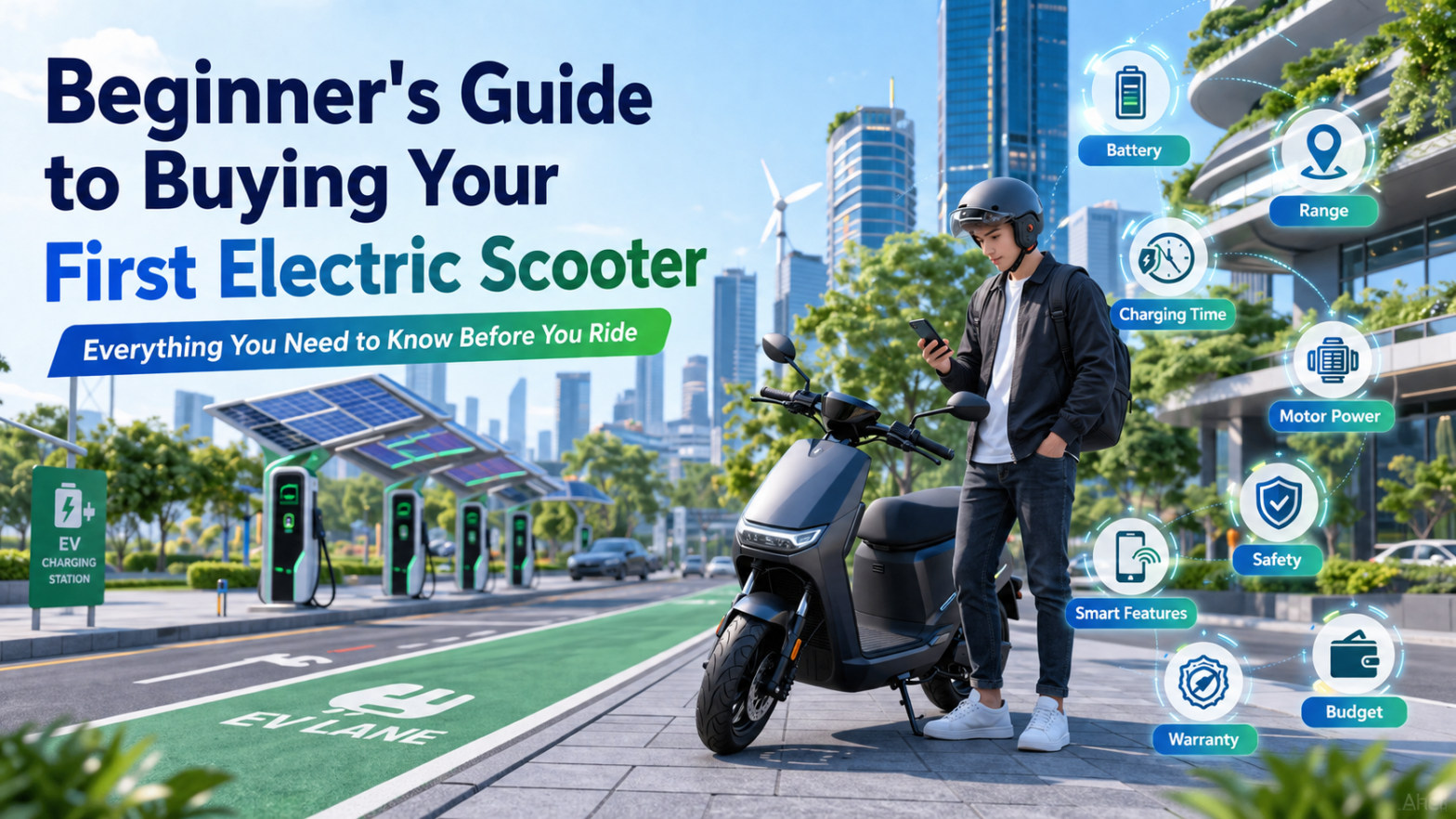
Beginner’s Guide to Buying Your First Electric Scooter
Electric Scooter Buying Guide is the perfect starting point for anyone planning to purchase their first electric scooter. With a wide range of models available, understanding key factors such as battery capacity, riding range, motor power, charging time, and safety features is essential before making a decision. A well-informed choice not only ensures better performance but also helps you save money in the long run. Whether you need an electric scooter for daily commuting, city travel, or short-distance rides, this Electric Scooter Buying Guide will help you compare features, evaluate your options, and choose a reliable, eco-friendly scooter that suits your lifestyle and budget.
However, with so many brands and models available, choosing the right electric scooter can feel overwhelming. An Electric Scooter Buying Guide helps simplify the decision by explaining important factors such as battery capacity, riding range, charging time, motor power, safety features, and price, all of which play a vital role in selecting the perfect scooter.
This Electric Scooter Buying Guide will walk you through everything you need to know before purchasing your first electric scooter, helping you compare options, avoid common mistakes, and make a confident, informed decision that matches your budget and riding needs.
Electric Scooter Buying Guide: Why Choose an Electric Scooter?
Electric scooters are changing the way people commute by offering a cleaner, quieter, and more economical alternative to traditional petrol-powered vehicles.
Some of the biggest benefits include:
- Lower running costs
- Zero tailpipe emissions
- Easy home charging
- Reduced maintenance
- Quiet and smooth rides
- Smart technology features
- Lower operating costs
- Environmentally friendly transportation
For most daily commuters, electric scooters provide the perfect balance of affordability and convenience.
Step 1: Understand Your Daily Travel Needs
Before comparing different models, think about how you’ll use your scooter.
Ask yourself:
- How many kilometers do I travel each day?
- Will I ride mostly in the city?
- Do I frequently travel on highways?
- Will I carry a passenger?
- Do I need extra storage?
Your daily riding habits will determine the ideal battery size, motor power, and riding range.
Step 2: Choose the Right Battery
The battery is the heart of every electric scooter.
Most modern scooters use lithium-ion batteries because they offer:
- Longer lifespan
- Faster charging
- Better safety
- Higher energy efficiency
- Lightweight design
When comparing scooters, pay attention to:
- Battery capacity
- Charging time
- Battery warranty
- Estimated lifespan
- Replacement cost
A high-quality battery ensures reliable performance and long-term savings.
Step 3: Consider the Riding Range
Range refers to the maximum distance a scooter can travel on a single charge.
Common ranges include:
- 60–80 km
- 80–120 km
- 120–180 km
- 180 km and above
Choose a scooter that comfortably exceeds your average daily travel distance.
This reduces charging frequency and helps avoid range anxiety.
Step 4: Evaluate Motor Power
Motor power directly affects acceleration, climbing ability, and overall performance.
Typical motor categories:
1–2 kW
Suitable for:
- Short city rides
- Students
- Beginners
2–4 kW
Ideal for:
- Daily commuting
- Mixed city traffic
- Better acceleration
Above 4 kW
Best for:
- High-performance riding
- Steep roads
- Longer journeys
For most first-time buyers, a mid-range motor offers an excellent balance of performance and efficiency.
Step 5: Check Charging Time
Charging time varies depending on battery size and charger type.
Typical charging times:
- Fast charging: 2–4 hours
- Standard charging: 4–8 hours
If you commute every day, a scooter with fast charging can be particularly convenient.
Many models also allow overnight charging using a standard household outlet.
Step 6: Look for Essential Safety Features
Safety should always be a priority.
Important features include:
- Disc brakes
- Combined braking system (CBS)
- Anti-lock braking system (ABS) on premium models
- LED headlights
- Bright tail lamps
- Turn indicators
- Side-stand sensor
- Reverse mode
- Anti-theft alarm
These features improve both rider safety and everyday usability.
Step 7: Compare Smart Features
Modern electric scooters often include advanced technology.
Popular features include:
- Smartphone app connectivity
- GPS tracking
- Digital dashboard
- Bluetooth
- Ride statistics
- Battery monitoring
- Navigation
- Remote locking
- Over-the-air software updates
These features make ownership more convenient and enjoyable.
Step 8: Understand Maintenance Requirements
Electric scooters generally require much less maintenance than petrol scooters.
Routine maintenance includes:
- Tire inspection
- Brake servicing
- Suspension checks
- Battery health monitoring
Since there is no engine oil, clutch, or exhaust system, maintenance costs remain significantly lower.
Step 9: Consider Warranty and Service Support
A reliable warranty provides peace of mind.
Before buying, check:
- Battery warranty
- Motor warranty
- Vehicle warranty
- Service network
- Availability of spare parts
Buying from a brand with authorized service centers nearby makes future maintenance much easier.
Step 10: Set a Budget
Electric scooters are available across various price ranges.
Instead of choosing the cheapest option, focus on overall value.
Compare:
- Features
- Battery quality
- Riding range
- Warranty
- Service support
- Build quality
Remember that lower running and maintenance costs often compensate for a slightly higher purchase price.
Electric Scooter Buying Guide: Avoid These Beginner Buying Mistakes
Many new buyers make avoidable mistakes.
Avoid:
- Buying based only on price
- Ignoring battery warranty
- Choosing insufficient riding range
- Overlooking service availability
- Forgetting charging convenience
- Ignoring safety features
- Not taking a test ride
Taking time to compare options helps prevent costly regrets later.
Questions to Ask Before Buying
Before making your purchase, ask the dealer:
- What is the certified riding range?
- How long does charging take?
- What warranty is included?
- How much does battery replacement cost?
- Are spare parts easily available?
- Where is the nearest service center?
- Are software updates available?
- Does the scooter support fast charging?
These questions help ensure you’re making a well-informed decision.
Benefits of Owning Your First Electric Scooter
Once you’ve chosen the right scooter, you’ll enjoy several long-term advantages:
Lower Operating Costs
Electricity costs much less than petrol.
Reduced Maintenance
Fewer moving parts mean fewer repairs.
Quiet Riding
Electric motors operate smoothly and silently.
Eco-Friendly Transportation
Zero tailpipe emissions contribute to cleaner cities.
Smart Features
Modern technology enhances convenience and security.
Easy Home Charging
Charge overnight using a regular household outlet.
Frequently Asked Questions
Is an electric scooter good for beginners?
Yes. Most electric scooters are easy to ride, require minimal maintenance, and offer smooth acceleration, making them ideal for first-time riders.
How far can an electric scooter travel?
Depending on the model, modern electric scooters typically offer a range between 60 km and over 180 km on a single charge.
How long do electric scooter batteries last?
Most lithium-ion batteries last between 5 and 8 years with proper care and regular charging.
Can I charge my scooter at home?
Yes. Most electric scooters can be charged using a standard household electrical outlet.
Is maintenance expensive?
No. Electric scooters usually require less maintenance than petrol scooters because they have fewer mechanical components.
Tips for First-Time Electric Scooter Owners
To get the most from your new scooter:
- Charge the battery regularly.
- Avoid completely draining the battery.
- Maintain proper tire pressure.
- Follow the manufacturer’s service schedule.
- Keep the scooter clean and dry.
- Use the recommended charger.
- Store the scooter in a shaded area whenever possible.
These habits improve battery life and overall performance.
Conclusion
Buying your first electric scooter is an investment in convenience, savings, and sustainable transportation. While the number of available models may seem overwhelming, choosing the right scooter becomes much easier when you focus on your daily travel needs, battery quality, riding range, safety features, and long-term ownership costs.
A well-chosen electric scooter can significantly reduce your commuting expenses, require less maintenance than a petrol scooter, and provide a smooth, quiet, and enjoyable riding experience. With ongoing improvements in battery technology, smart features, and charging infrastructure, there has never been a better time to make the switch.
Take your time, compare different options, ask the right questions, and choose a scooter that fits your lifestyle. Your first electric scooter isn’t just a vehicle—it’s a step toward smarter, cleaner, and more economical urban mobility.