
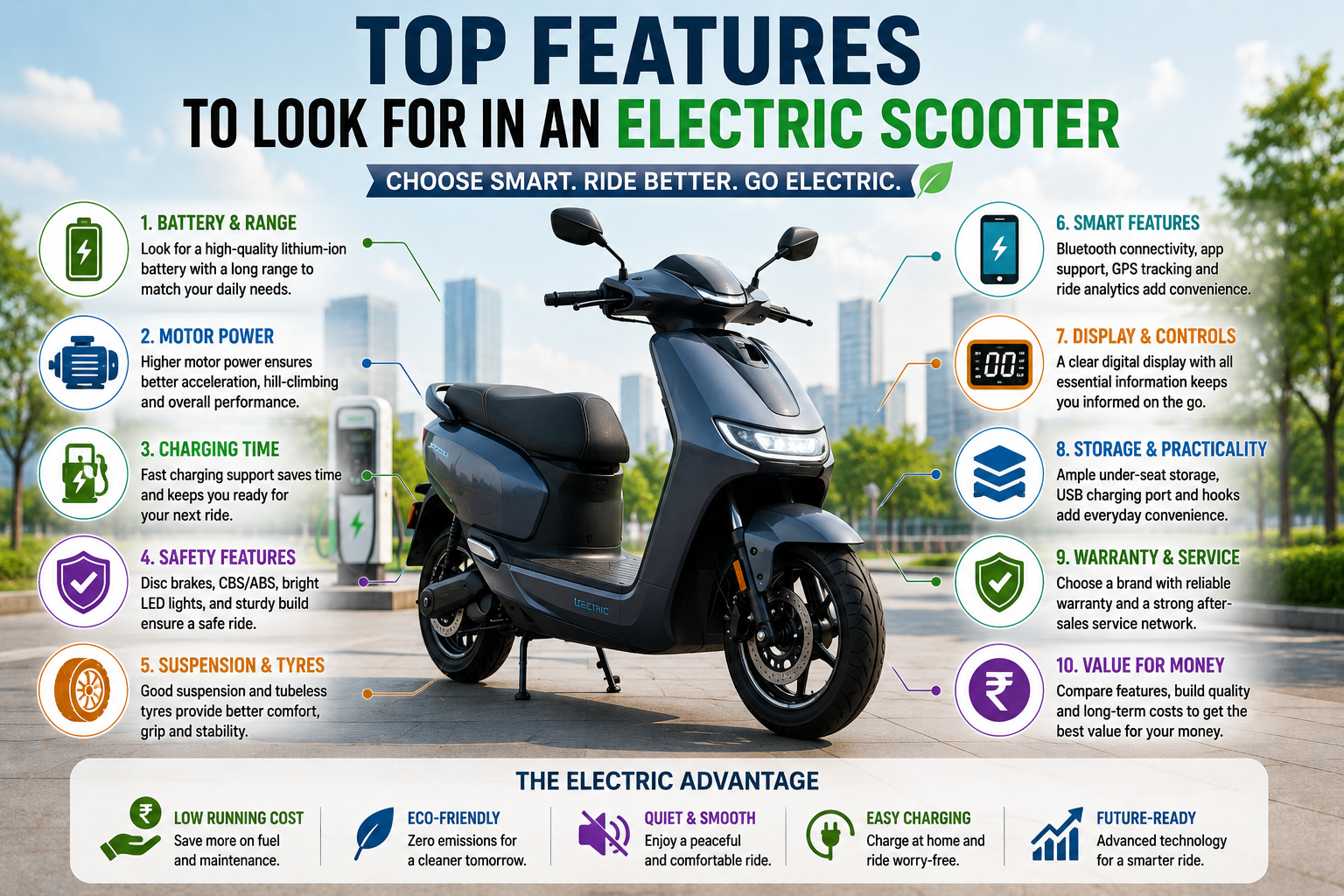
Top Features to Look for in an Electric Scooter
Electric Scooter Features play a crucial role in determining the performance, safety, comfort, and overall value of your ride. Whether you’re purchasing your first electric scooter or upgrading to a newer model, understanding the essential features can help you make a well-informed decision. From battery capacity and riding range to motor power, smart technology, and safety systems, every feature contributes to a better riding experience. In this guide, we’ll explore the most important electric scooter features to consider before making your purchase.
Electric scooters have become one of the most popular choices for modern commuters. They are economical to operate, environmentally friendly, easy to maintain, and equipped with advanced technology that makes everyday travel more convenient. With the growing number of electric scooter brands and models available, choosing the right one can be challenging—especially if you’re buying your first eScooter.
Not every electric scooter is built the same. Some are designed for short city rides, while others are made for long-distance commuting or high-performance riding. Understanding the key features before making a purchase will help you select a scooter that matches your budget, lifestyle, and daily travel needs.
In this guide, we’ll explore the most important features to consider before buying an electric scooter and explain why each one matters.
Choosing the right electric scooter features ensures a better riding experience:
Buying an electric scooter is more than comparing prices. The right combination of features can improve your riding experience, lower your long-term costs, and provide better safety and reliability.
Choosing wisely can help you enjoy:
- Better performance
- Longer battery life
- Lower maintenance costs
- Improved safety
- Greater riding comfort
- Higher resale value
Let’s look at the most important features every buyer should evaluate.
1. Battery Capacity and Quality
The battery is the most important component of an electric scooter because it determines how far you can travel and how efficiently the scooter performs.
Most modern scooters use lithium-ion batteries because they offer:
- Longer lifespan
- Faster charging
- Better energy efficiency
- Lower weight
- Improved reliability
When comparing models, consider:
- Battery capacity
- Battery warranty
- Charging cycles
- Replacement cost
- Battery management system (BMS)
A quality battery ensures consistent performance and reduces long-term ownership costs.
2. Riding Range
Range refers to the distance an electric scooter can travel on a single charge.
Common range categories include:
- 60–80 km
- 80–120 km
- 120–180 km
- 180+ km
Choose a scooter that comfortably exceeds your average daily commute. This provides flexibility and reduces the need for frequent charging.
Keep in mind that factors such as rider weight, terrain, speed, and weather can affect the actual range.
3. Motor Power
The motor determines acceleration, climbing ability, and overall riding performance.
Typical categories include:
1–2 kW
Suitable for:
- Students
- Beginners
- City riding
2–4 kW
Ideal for:
- Daily commuting
- Mixed traffic
- Moderate inclines
Above 4 kW
Best for:
- High-performance riding
- Long-distance travel
- Hilly terrain
Selecting the right motor ensures the scooter performs well under your usual riding conditions.
4. Charging Time
Charging convenience is another key consideration.
Most electric scooters require between 4 and 8 hours for a full charge, while premium models support fast charging in as little as 2–4 hours.
Look for features such as:
- Fast charging support
- Smart charging protection
- Removable batteries (if available)
- Standard home charging compatibility
Faster charging makes daily commuting more convenient.
5. Safety Features
Safety should never be overlooked when purchasing an electric scooter.
Essential safety features include:
- Disc brakes
- Combined Braking System (CBS)
- Anti-lock Braking System (ABS) on premium models
- Bright LED headlights
- LED taillights
- Turn indicators
- Hazard lights
- Side-stand sensor
- Reverse assist
High-quality braking systems are particularly important in wet conditions and heavy traffic.
6. Build Quality
A durable frame improves stability, comfort, and long-term reliability.
Check for:
- Strong chassis construction
- Rust-resistant materials
- Premium paint quality
- High-quality suspension
- Comfortable seat
Well-built scooters generally require fewer repairs and retain their value longer.
7. Suspension System
Road conditions vary greatly, especially in urban environments.
A good suspension system absorbs bumps and improves ride quality.
Look for:
- Front telescopic suspension
- Rear hydraulic suspension
- Adjustable suspension (on premium models)
Better suspension reduces fatigue during longer rides.
8. Tire Type
Tires directly influence comfort, grip, and safety.
Common options include:
Tubeless Tires
Advantages:
- Better puncture resistance
- Easier repairs
- Improved safety
Wider Tires
Benefits:
- Better stability
- Improved traction
- Greater riding confidence
Always check tire quality before purchasing.
9. Smart Features
Modern electric scooters include many intelligent features.
Popular options include:
- Smartphone app connectivity
- GPS tracking
- Bluetooth
- Navigation
- Digital dashboard
- Ride statistics
- Battery health monitoring
- Anti-theft alerts
- Remote lock/unlock
- Over-the-air software updates
These features improve convenience and make ownership more enjoyable.
10. Display and Dashboard
A clear digital display provides important riding information.
Useful dashboard features include:
- Speed
- Battery percentage
- Riding mode
- Estimated range
- Trip meter
- Odometer
- Warning indicators
A bright display remains easy to read in both daylight and nighttime conditions.
11. Riding Modes
Most electric scooters include multiple riding modes.
Examples:
- Eco Mode
- Normal Mode
- Sport Mode
These modes allow riders to balance speed, acceleration, and battery efficiency according to their needs.
12. Storage Space
Storage is often overlooked but adds convenience.
Look for:
- Under-seat storage
- Front storage hooks
- USB charging ports
- Luggage accessories
Practical storage makes daily commuting easier.
13. Warranty and Service Network
Warranty coverage reflects the manufacturer’s confidence in its product.
Check:
- Battery warranty
- Motor warranty
- Vehicle warranty
- Service center availability
- Spare parts availability
A strong after-sales service network is just as important as the scooter itself.
14. Total Cost of Ownership
Don’t focus only on the purchase price.
Consider:
- Charging costs
- Maintenance
- Insurance
- Repairs
- Battery replacement
- Resale value
A scooter with slightly higher upfront cost may save much more over its lifetime.
Mistakes to Avoid When Choosing Electric Scooter Features
Many buyers overlook important factors.
Avoid:
- Buying solely based on price
- Ignoring battery warranty
- Choosing insufficient range
- Overlooking service support
- Ignoring safety features
- Skipping a test ride
Taking time to compare models helps ensure long-term satisfaction.
Questions About Electric Scooter Features Before Buying
Before making your purchase, ask:
- What is the real-world riding range?
- How long does charging take?
- What warranty is included?
- Does it support fast charging?
- Where is the nearest service center?
- What is the battery replacement cost?
- Are software updates available?
These questions can help you make a confident buying decision.
Frequently Asked Questions About Electric Scooter Features
What is the most important feature in an electric scooter?
The battery is the most important component because it affects range, charging time, and overall performance.
How much range do I need?
Choose a scooter that offers at least 20–30% more range than your average daily commute.
Are smart electric scooter features necessary?
While not essential, features like GPS tracking, smartphone connectivity, and battery monitoring improve convenience and security.
Should I buy a fast-charging scooter?
If you ride daily or frequently travel longer distances, fast charging can save significant time.
How long should an electric scooter battery last?
A quality lithium-ion battery typically lasts between five and eight years with proper care.
Conclusion
Choosing the right electric scooter involves much more than comparing prices. Battery quality, riding range, motor power, charging speed, safety features, build quality, and after-sales support all play a crucial role in your ownership experience.
The best electric scooter is one that matches your daily travel needs, budget, and lifestyle while offering dependable performance and long-term value. By understanding the features that matter most, you can make an informed decision and enjoy years of efficient, affordable, and eco-friendly commuting.
As electric mobility continues to evolve, investing in a feature-rich electric scooter is not just a smart purchase—it’s a step toward cleaner transportation and a more sustainable future.