
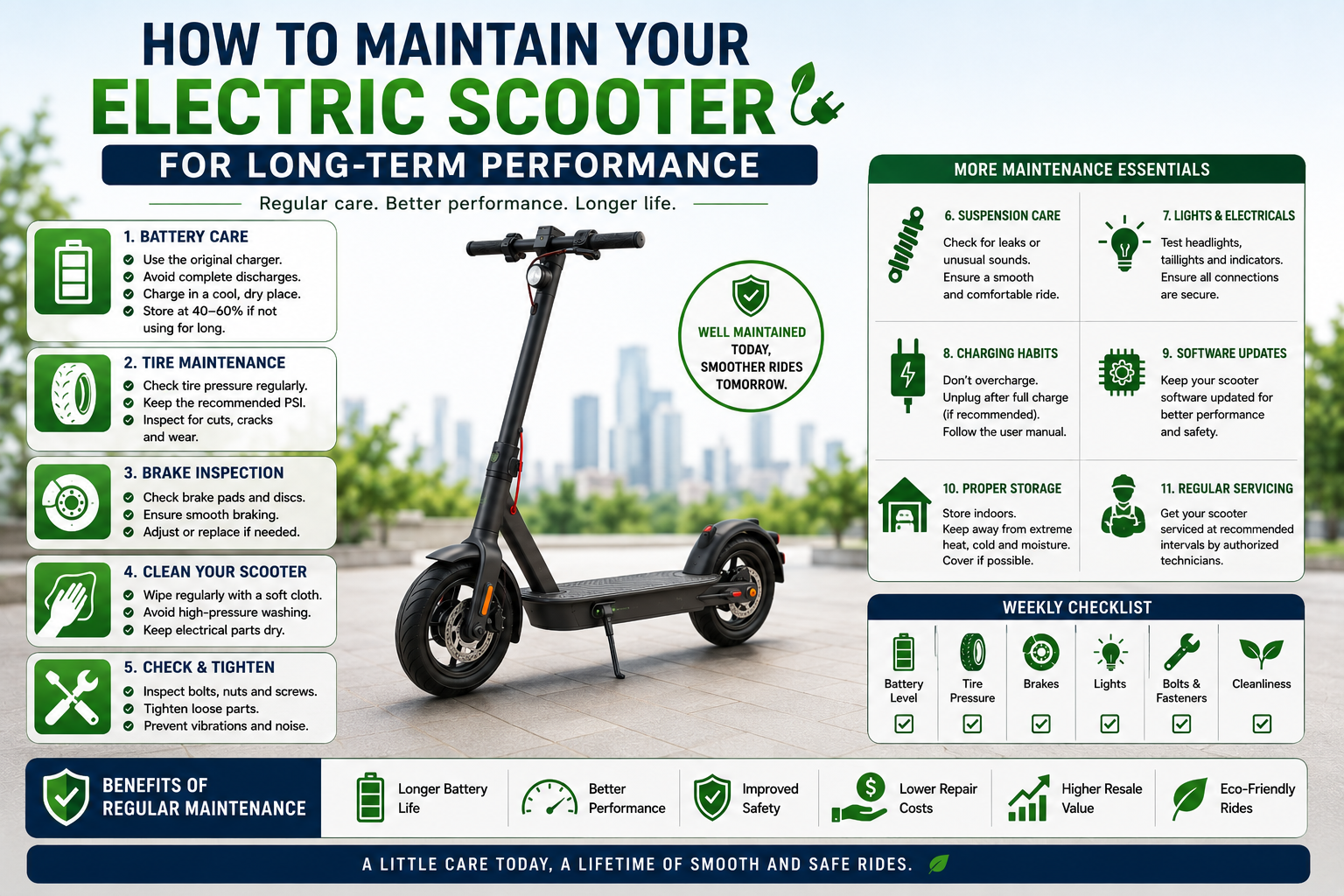
How to Maintain Your Electric Scooter for Long-Term Performance
Electric Scooter Maintenance Tips help riders keep their vehicles in excellent condition, improve performance, and extend battery life. Electric scooters have become one of the most practical and eco-friendly ways to travel, offering lower running costs, minimal maintenance, quiet operation, and an enjoyable riding experience. However, like any vehicle, an electric scooter requires regular care to deliver reliable performance and a long service life.
Many riders focus only on charging the battery, but proper maintenance involves much more. Regular inspections, correct tire pressure, brake maintenance, cleaning, and smart riding habits all contribute to better efficiency, safety, and reduced repair costs.
The good news is that maintaining an electric scooter is much easier than maintaining a traditional petrol scooter. With fewer moving parts and no engine oil changes, you can keep your scooter in excellent condition by following a few simple maintenance practices.
In this complete guide, you’ll learn how to maintain your electric scooter for long-term performance and enjoy years of smooth, worry-free riding.
Why Electric Scooter Maintenance Tips Matters
Routine maintenance helps you:
- Extend battery life
- Improve riding range
- Increase safety
- Reduce repair costs
- Maintain smooth performance
- Improve resale value
- Prevent unexpected breakdowns
A well-maintained scooter not only performs better but also lasts longer.
1. Take Care of the Battery
The battery is the heart of your electric scooter and deserves the most attention.
Best Battery Practices
- Use only the original charger.
- Recharge before the battery reaches a very low level.
- Avoid exposing the battery to extreme heat or cold.
- Store the scooter in a cool, dry place.
- If not using the scooter for several weeks, keep the battery charged to around 40–60%.
Proper battery care can significantly extend its lifespan and maintain consistent performance.
2. Check Tire Pressure Regularly
Tires affect handling, comfort, efficiency, and battery range.
Underinflated tires:
- Reduce riding range
- Wear out faster
- Increase rolling resistance
- Affect braking performance
Check tire pressure at least once every two weeks or before long rides, following the manufacturer’s recommended PSI.
3. Inspect Tires for Wear
In addition to maintaining the correct pressure, inspect tires for:
- Cracks
- Cuts
- Embedded objects
- Uneven wear
- Low tread depth
Replace worn tires promptly to maintain grip and safety.
4. Keep the Scooter Clean
Dust, dirt, and mud can gradually affect moving parts and electrical components.
Clean your scooter regularly using:
- A soft cloth
- Mild soap solution
- Gentle water spray (if recommended)
Avoid using high-pressure water, which can force moisture into electrical components.
5. Inspect the Brakes
Brakes are one of the most important safety features.
Regularly check:
- Brake pads
- Brake discs
- Brake cables (if applicable)
- Brake fluid (for hydraulic systems)
- Braking response
If braking feels weak or unusual, have the system inspected by a qualified technician.
6. Tighten Loose Bolts and Fasteners
Road vibrations can loosen screws and bolts over time.
Periodically inspect:
- Handlebar bolts
- Mirrors
- Brake levers
- Seat mounts
- Footrests
- Suspension fasteners
Tightening loose components improves safety and prevents unnecessary wear.
7. Check the Suspension
A healthy suspension system provides:
- Better comfort
- Improved handling
- Reduced vibration
- Increased stability
Look for:
- Oil leaks
- Excessive bouncing
- Unusual noises
- Loose mounting points
Address suspension issues early to avoid more expensive repairs.
8. Monitor Battery Health
Many modern electric scooters provide battery information through:
- Digital dashboards
- Mobile apps
- Battery Management Systems (BMS)
Monitor:
- Battery percentage
- Charging cycles
- Estimated range
- Temperature warnings
- Error messages
Early detection of battery issues can prevent larger problems.
9. Keep Electrical Connections Dry
Although many electric scooters are water-resistant, electrical connectors should remain clean and dry.
Regularly inspect:
- Charging port
- Wiring
- Connectors
- Protective covers
Avoid riding through deep water or flooding.
10. Follow Proper Charging Habits
Smart charging improves battery longevity.
Recommended habits include:
- Charge after regular use.
- Avoid frequent deep discharges.
- Disconnect the charger once charging is complete if recommended by the manufacturer.
- Charge indoors when possible.
Good charging habits reduce long-term battery wear.
11. Update Software (If Available)
Many premium electric scooters receive software updates.
Updates may improve:
- Battery management
- Motor performance
- Ride modes
- Navigation
- Security features
Check the manufacturer’s app periodically for available updates.
12. Store the Scooter Correctly
If storing your scooter for an extended period:
- Clean it thoroughly.
- Charge the battery to about 40–60%.
- Cover the scooter.
- Store indoors.
- Avoid damp environments.
Proper storage prevents corrosion and protects the battery.
13. Ride Responsibly
The way you ride affects maintenance requirements.
Smooth riding reduces stress on:
- Motor
- Tires
- Suspension
- Brakes
- Battery
Avoid:
- Sudden acceleration
- Hard braking
- Overloading
- High-speed riding on rough roads
Gentle riding extends component life.
14. Schedule Regular Service
Even if your scooter appears to be functioning normally, periodic professional inspections are recommended.
A technician can inspect:
- Battery condition
- Motor performance
- Brake system
- Suspension
- Bearings
- Electrical systems
- Software diagnostics
Preventive servicing often costs less than major repairs.
15. Use Genuine Spare Parts
When replacing components, always choose manufacturer-approved parts.
Original parts provide:
- Better compatibility
- Greater reliability
- Warranty protection
- Improved durability
Avoid low-quality aftermarket components that may compromise safety.
Common Maintenance Mistakes
Avoid these common errors:
- Ignoring tire pressure
- Using the wrong charger
- Washing with high-pressure water
- Delaying brake repairs
- Leaving the battery fully discharged
- Skipping regular inspections
- Ignoring warning lights
Small maintenance issues can become expensive if neglected.
Simple Weekly Maintenance Checklist
Every week:
- ✔ Check battery level
- ✔ Inspect tires
- ✔ Test brakes
- ✔ Clean the scooter
- ✔ Check lights
- ✔ Tighten visible bolts
- ✔ Inspect charging port
This routine takes only a few minutes and helps prevent bigger problems.
Monthly Maintenance Checklist
Once a month:
- Check suspension
- Inspect wiring
- Clean under the scooter
- Review battery health
- Lubricate moving parts (if recommended)
- Inspect tires for wear
- Check all lights and indicators
Consistent maintenance ensures dependable performance.
Frequently Asked Questions
How often should I service my electric scooter?
Routine checks should be performed weekly, while professional servicing is generally recommended according to the manufacturer’s schedule or after a specified number of kilometers.
Can I wash my electric scooter?
Yes, but avoid high-pressure water. Use a soft cloth and mild cleaning solution, and keep water away from electrical connectors and charging ports.
How can I extend battery life?
Use the original charger, avoid deep discharges, charge in moderate temperatures, and store the battery at around 40–60% if the scooter will not be used for an extended period.
Why is tire pressure important?
Proper tire pressure improves safety, handling, battery efficiency, and tire lifespan while providing a smoother ride.
Are electric scooters easier to maintain than petrol scooters?
Yes. Electric scooters have fewer moving parts, no engine oil, no spark plugs, and generally require less maintenance than petrol-powered scooters.
Conclusion
Following Electric Scooter Maintenance Tips does not require extensive mechanical knowledge or expensive tools. Simple habits such as keeping the battery healthy, checking tire pressure, inspecting the brakes, cleaning the scooter regularly, and following the manufacturer’s service recommendations can greatly improve performance and extend the scooter’s lifespan.
These Electric Scooter Maintenance Tips not only enhance safety and riding comfort but also help you avoid unexpected repairs and preserve your scooter’s value. By investing a little time in regular care and following proper Electric Scooter Maintenance Tips, you can enjoy reliable, efficient, and eco-friendly transportation for many years.
Whether you ride daily or occasionally, applying the right Electric Scooter Maintenance Tips helps deliver better performance, greater reliability, and a more enjoyable riding experience every time you hit the road.