
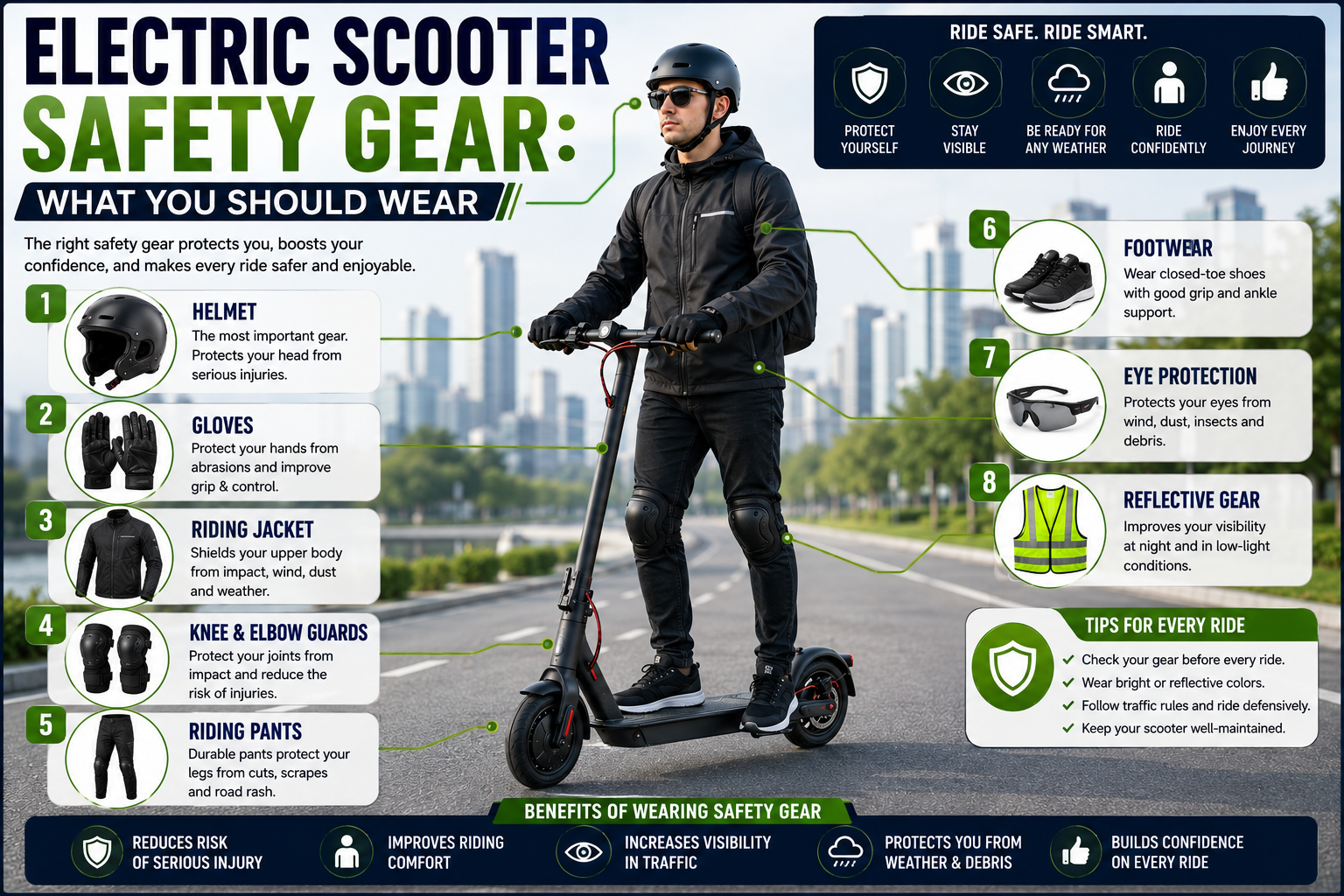
Electric Scooter Safety Gear: What You Should Wear
Electric scooters have become one of the fastest-growing modes of personal transportation. They are affordable, environmentally friendly, and perfect for navigating busy city streets. Whether you use your electric scooter for commuting, running errands, or weekend adventures, one thing should always come first—your safety.
While electric scooters are generally easy to ride, they can still reach speeds of 25–70 km/h depending on the model. At these speeds, even a small mistake or unexpected obstacle can lead to serious injuries. Potholes, wet roads, distracted drivers, pedestrians, and sudden braking all increase the risk of accidents.
Fortunately, wearing the right safety gear can dramatically reduce the severity of injuries and give you greater confidence on every ride. Protective equipment isn’t just for professional riders—it is essential for beginners and experienced commuters alike.
This comprehensive guide explains the most important electric scooter safety gear, how each item protects you, and what features to look for when making your purchase.
Why Wearing Safety Gear Matters
Many riders assume that because electric scooters are smaller and slower than motorcycles, protective gear isn’t necessary. However, accidents involving electric scooters can still result in serious injuries, particularly to the head, hands, elbows, knees, and wrists.
Safety gear acts as your first line of defense by absorbing impacts, preventing abrasions, and improving your visibility on the road.
Benefits of Wearing Proper Safety Gear
- Reduces the risk of serious injuries
- Protects your head and body during falls
- Improves visibility to other road users
- Increases confidence while riding
- Enhances comfort during long trips
- Shields against wind, dust, rain, and debris
- Helps you stay prepared for changing weather conditions
Whether you’re traveling one kilometer or twenty, wearing the proper gear should become a habit.
1. A Certified Helmet – Your Most Important Safety Gear
A helmet is the single most important piece of equipment every electric scooter rider should own. Head injuries are among the most severe outcomes of road accidents, and a quality helmet can significantly reduce the risk of life-threatening trauma.
Why Helmets Matter
During a collision, your head may strike the road, a vehicle, or another object. A helmet absorbs much of the impact energy, helping protect your skull and brain.
Even a low-speed accident can cause serious head injuries if you’re not wearing a helmet.
Types of Helmets
Open-Face Helmet
Open-face helmets provide:
- Excellent ventilation
- Wide field of vision
- Comfortable daily commuting
- Lightweight design
These helmets are ideal for city riders who prioritize comfort.
Full-Face Helmet
Full-face helmets offer:
- Maximum protection
- Face and chin coverage
- Better protection from weather
- Reduced wind noise
These are recommended for higher-speed electric scooters.
Modular Helmet
Modular helmets combine the benefits of open-face and full-face helmets with a flip-up front section.
They are popular among commuters who want flexibility without compromising safety.
Features to Look For
Choose a helmet that offers:
- Recognized safety certification
- Strong outer shell
- Impact-absorbing foam liner
- Adjustable chin strap
- Comfortable fit
- Good ventilation
- Washable inner padding
- Lightweight construction
A helmet should fit snugly without causing discomfort. Replace it immediately after a significant impact, even if no visible damage is present.
2. Protective Riding Gloves
Your instinct during a fall is to use your hands to protect yourself. Unfortunately, this also means your hands are especially vulnerable to cuts, bruises, fractures, and road rash.
Protective gloves provide an extra layer of defense while also improving comfort and grip.
Benefits of Riding Gloves
- Better handlebar grip
- Reduced vibration
- Improved comfort
- Protection against abrasions
- Warmth during cold weather
- Better control in wet conditions
Types of Gloves
Summer Gloves
Made from breathable materials that keep your hands cool while providing basic protection.
Winter Gloves
Designed with insulated linings to protect against cold temperatures.
Waterproof Gloves
Ideal for rainy weather and long-distance commuting.
Features to Consider
Look for gloves with:
- Reinforced palms
- Breathable fabric
- Adjustable wrist closure
- Touchscreen-compatible fingertips
- Protective knuckle padding
- Comfortable fit
Quality gloves help reduce fatigue during long rides and improve overall control.
3. Protective Riding Jacket
A riding jacket protects much more than your appearance—it shields your upper body from injuries, harsh weather, and road debris.
Modern riding jackets combine comfort with advanced protective materials, making them suitable for everyday commuting.
Benefits
- Protects shoulders and elbows
- Reduces road rash
- Blocks wind and rain
- Improves comfort
- Increases visibility
Types of Jackets
Mesh Jackets
Perfect for summer riding due to excellent airflow.
Textile Jackets
Lightweight and versatile for daily commuting.
Waterproof Jackets
Designed for rainy conditions with sealed seams and water-resistant fabrics.
Protective Armored Jackets
Include built-in shoulder, elbow, and back protectors for enhanced safety.
Important Features
Choose jackets with:
- CE-certified armor (where applicable)
- Reflective strips
- Waterproof materials
- Breathable lining
- Adjustable cuffs
- Multiple storage pockets
A bright-colored jacket also improves visibility during daytime rides.
4. Long Pants for Better Protection
Many riders underestimate the importance of wearing proper pants. Shorts leave your legs exposed to cuts, scrapes, burns, and impact injuries.
Long riding pants provide essential protection for your lower body.
Recommended Options
- Reinforced riding jeans
- Protective textile pants
- Armored riding trousers
- Durable outdoor pants
Features
Look for:
- Abrasion-resistant fabric
- Knee protection
- Comfortable fit
- Stretch panels
- Weather resistance
Avoid loose clothing that could get caught in the scooter’s moving parts.
5. Proper Footwear
Your feet play an important role in maintaining balance, braking, and safely stopping your scooter.
Choosing appropriate footwear improves stability and reduces the risk of slipping.
Best Footwear Options
- Athletic sneakers with good grip
- Riding shoes
- Protective boots
- Waterproof shoes
Avoid Wearing
- Flip-flops
- Slippers
- Sandals
- High heels
- Smooth-soled dress shoes
Features to Look For
- Non-slip soles
- Strong ankle support
- Comfortable cushioning
- Closed-toe protection
- Water resistance
Proper footwear allows you to place your feet securely on the scooter deck and the ground when stopping.
6. Knee Guards
The knees are among the first body parts to contact the ground during many falls.
Knee guards provide valuable protection by absorbing impacts and reducing abrasions.
Benefits
- Protect joints during falls
- Reduce bruising
- Improve rider confidence
- Ideal for beginners
- Useful for higher-speed scooters
Look for lightweight guards with adjustable straps that remain comfortable throughout your ride.
7. Elbow Guards
Elbows are particularly vulnerable during side impacts and falls.
Protective elbow guards:
- Reduce impact injuries
- Prevent scrapes
- Improve confidence
- Allow greater freedom of movement
Many riding jackets already include elbow protection, but standalone guards are also available.
Common Beginner Mistakes
New riders often make safety mistakes that are easy to avoid.
These include:
- Riding without a helmet
- Wearing sandals
- Ignoring reflective clothing
- Using damaged safety gear
- Wearing loose clothing
- Choosing style over protection
- Forgetting gloves on short rides
Remember, accidents can happen even on familiar roads and short journeys.
Safety Checklist Before Every Ride
Before starting your journey, make sure you have:
✅ Certified Helmet
✅ Riding Gloves
✅ Protective Jacket
✅ Long Pants
✅ Closed-Toe Shoes
✅ Knee Guards (if needed)
✅ Elbow Guards (if needed)
These simple checks can significantly reduce your risk of injury and make every ride more comfortable and enjoyable.