
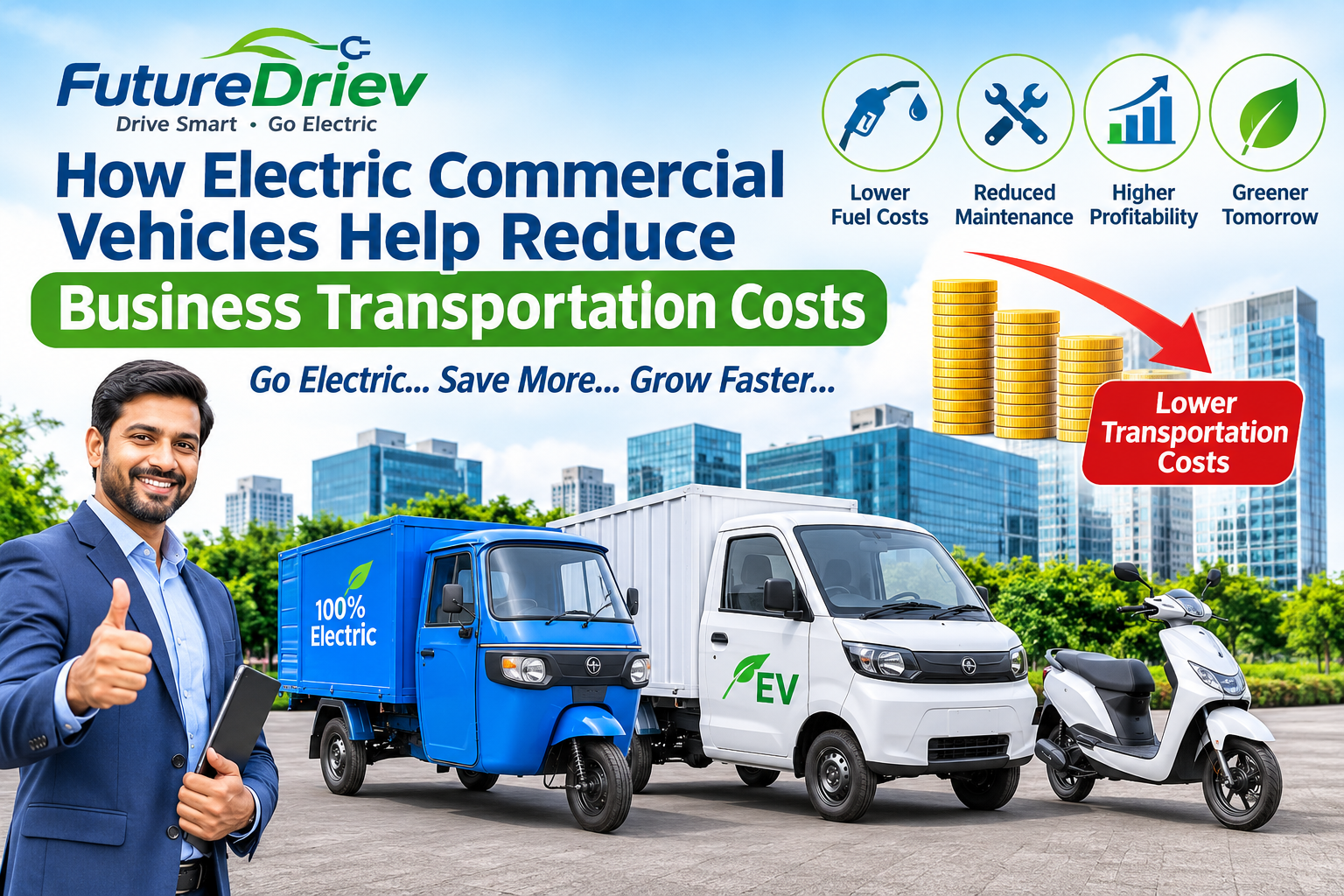
Businesses across India are looking for smarter and more affordable transportation solutions. Whether it is delivering products, transporting goods, managing logistics, or operating a commercial fleet, transportation expenses can significantly affect business profits. Rising petrol and diesel prices, vehicle maintenance costs, and operational expenses make traditional commercial vehicles increasingly expensive to operate.
This is where electric commercial vehicles are becoming a practical alternative. Electric vehicles (EVs) help businesses reduce fuel expenses, lower maintenance costs, improve operational efficiency, and support environmentally friendly transportation.
For businesses in Hyderabad and other growing cities, switching to electric commercial vehicles can be a smart long-term investment. In this article, we explore how electric commercial vehicles help reduce business transportation costs and why companies should consider making the transition.
1. Lower Fuel Costs with Electric Commercial Vehicles
One of the biggest advantages of electric commercial vehicles is their lower energy cost compared to petrol and diesel vehicles.
Traditional commercial vehicles depend on petrol or diesel, and fuel prices can change frequently. Businesses that operate delivery vehicles, cargo autos, and transportation fleets often spend a significant amount of money on fuel every month.
Electric commercial vehicles use rechargeable batteries instead of conventional fuels. Charging an electric vehicle can cost considerably less than refuelling a petrol or diesel vehicle, depending on electricity tariffs, vehicle efficiency, and daily usage.
Key benefits include:
- Reduced daily transportation expenses.
- Less dependency on petrol and diesel.
- More predictable energy costs.
- Better opportunities for long-term operational savings.
For businesses with frequent transportation requirements, these savings can make a meaningful difference.
2. Reduced Maintenance and Servicing Expenses
Maintenance is another important factor that affects commercial transportation costs.
Petrol and diesel vehicles contain several moving engine components that require regular servicing, oil changes, filter replacements, and other maintenance activities.
Electric commercial vehicles have fewer moving parts in their powertrain. They do not require engine oil changes and generally have less mechanical complexity.
Common maintenance advantages include:
- No engine oil replacement.
- Fewer engine-related servicing requirements.
- Reduced wear on certain mechanical components.
- Regenerative braking in many models, which can reduce brake wear.
- Potentially lower routine maintenance expenses.
However, electric vehicles still require regular tyre checks, brake inspections, battery monitoring, and general servicing.
Lower maintenance requirements can help businesses reduce vehicle downtime and keep their transportation operations running efficiently.
3. Lower Operating Costs for Delivery and Logistics Businesses
Delivery companies, supermarkets, warehouses, e-commerce businesses, and local distributors depend heavily on transportation.
Every delivery involves expenses such as fuel, maintenance, driver costs, and vehicle depreciation.
Electric commercial vehicles can help reduce some of these expenses, especially when vehicles travel predictable daily routes and return to a central location for charging.
For example, businesses that transport groceries, packages, construction materials, or other goods within city limits can consider electric cargo vehicles for suitable routes.
By reducing fuel and maintenance expenses, businesses can improve their operating margins and manage transportation budgets more effectively.
4. Ideal for Last-Mile Delivery Services
Last-mile delivery is one of the most important parts of modern logistics. It involves transporting products from warehouses, distribution centres, or local stores directly to customers.
Businesses often make multiple short-distance trips every day, which can increase fuel consumption and maintenance costs.
Electric commercial vehicles are particularly useful for suitable last-mile delivery operations.
Industries that can benefit include:
- E-commerce and online shopping companies.
- Grocery and supermarket delivery services.
- Food and beverage distributors.
- Pharmaceutical delivery businesses.
- Local retail and wholesale suppliers.
- Small-scale logistics companies.
Electric vehicles can help these businesses manage frequent urban deliveries while reducing transportation expenses.
5. Lower Downtime and Improved Business Productivity
Vehicle downtime can directly affect business performance. When a commercial vehicle needs frequent repairs or servicing, deliveries may be delayed and business operations can be disrupted.
Electric commercial vehicles generally have simpler powertrains, which can reduce certain maintenance-related interruptions.
Businesses can improve productivity by:
- Planning regular charging schedules.
- Following preventive maintenance practices.
- Monitoring battery performance.
- Selecting vehicles according to daily transportation requirements.
- Training drivers in efficient driving techniques.
A well-planned electric fleet can support smoother transportation operations and more consistent delivery schedules.
6. Long-Term Savings on Business Transportation
Although electric commercial vehicles may have a different initial purchase price compared with conventional vehicles, businesses should evaluate the total cost of ownership rather than focusing only on the purchase price.
Total cost of ownership includes:
- Initial vehicle purchase cost.
- Electricity or fuel expenses.
- Regular maintenance and repairs.
- Insurance and registration, where applicable.
- Battery replacement considerations.
- Financing and depreciation.
- Charging infrastructure costs.
For businesses with high daily vehicle usage, lower energy and maintenance expenses may help offset the initial investment over time.
The actual savings depend on vehicle price, daily kilometres travelled, electricity rates, load carried, battery warranty, and vehicle lifespan.
7. Benefits of Electric Commercial Vehicles for Small Businesses
Small businesses often operate with limited budgets. Transportation expenses can reduce profits, especially for companies that depend on regular product deliveries.
Electric commercial vehicles can provide an opportunity to manage these expenses more efficiently.
For example, a grocery distributor transporting products to nearby retail stores may benefit from an electric cargo vehicle. Similarly, a local supplier delivering packaged goods can explore electric transportation for regular routes.
Businesses should consider factors such as load capacity, certified vehicle range, charging availability, service support, and warranty before purchasing.
Choosing the right vehicle can help small businesses improve transportation efficiency without unnecessarily increasing operational expenses.
8. Why Businesses Should Consider Electric Commercial Vehicles in Hyderabad
Hyderabad is a growing commercial and technology hub with increasing demand for logistics, delivery, retail distribution, and transportation services.
As businesses expand across areas such as Kukatpally, Madhapur, Gachibowli, Kondapur, and the Financial District, efficient transportation becomes increasingly important.
Electric commercial vehicles can be suitable for businesses operating within urban areas, particularly where daily routes and charging schedules are predictable.
Companies exploring electric mobility should compare vehicle specifications, load capacity, certified range, charging requirements, warranty, and after-sales support before making a decision.
Businesses can also check applicable government policies and incentives, as eligibility and availability may change.
9. How to Choose the Right Electric Commercial Vehicle
Selecting the right electric commercial vehicle is essential for achieving meaningful cost savings.
Before purchasing, consider these important factors:
1. Load Capacity: Choose a vehicle that can safely handle your regular business transportation requirements.
2. Driving Range: Check the certified range and evaluate whether it meets your actual daily travel needs.
3. Battery Warranty: Understand the battery warranty, coverage conditions, and replacement costs.
4. Charging Time: Select a vehicle that fits your business operating schedule and charging availability.
5. Service Support: Check the availability of servicing, spare parts, and technical assistance.
6. Total Cost of Ownership: Compare purchase price, charging expenses, maintenance, insurance, and expected resale value.
A vehicle that matches your business requirements can deliver better long-term value.
Frequently Asked Questions (FAQs)
1. How do electric commercial vehicles reduce business costs?
Electric commercial vehicles can reduce transportation costs through lower energy expenses, fewer powertrain maintenance requirements, and improved operational efficiency.
2. Are electric commercial vehicles suitable for small businesses?
Yes. They can be suitable for small businesses involved in local deliveries, goods transportation, retail distribution, and logistics, provided the vehicle matches their load and range requirements.
3. Are electric cargo vehicles cheaper to operate than diesel vehicles?
Electric cargo vehicles can have lower energy and routine maintenance costs. Actual savings depend on electricity prices, diesel prices, vehicle efficiency, load, and daily usage.
4. How long does an electric commercial vehicle battery last?
Battery life depends on battery technology, usage, charging practices, operating conditions, and maintenance. Buyers should review the manufacturer’s battery warranty and replacement policy.
5. Are electric commercial vehicles suitable for Hyderabad businesses?
Yes. They can be useful for suitable urban delivery and transportation operations in Hyderabad, especially when businesses have predictable routes and convenient charging facilities.
Conclusion
Electric commercial vehicles are changing how businesses approach transportation and logistics. By reducing fuel expenses, lowering certain maintenance requirements, and supporting efficient last-mile delivery, electric vehicles offer an opportunity to improve business profitability.
For small businesses, delivery companies, retailers, and logistics operators, switching to electric commercial vehicles can be a valuable long-term decision when the vehicle matches their operational requirements.
FutureDriev supports the growing electric mobility movement by offering electric vehicle solutions for modern transportation needs. Businesses interested in reducing transportation expenses can explore suitable electric mobility options and choose a vehicle based on their daily requirements.
Make a smarter transportation choice with electric mobility and take a step towards more efficient business operations.