
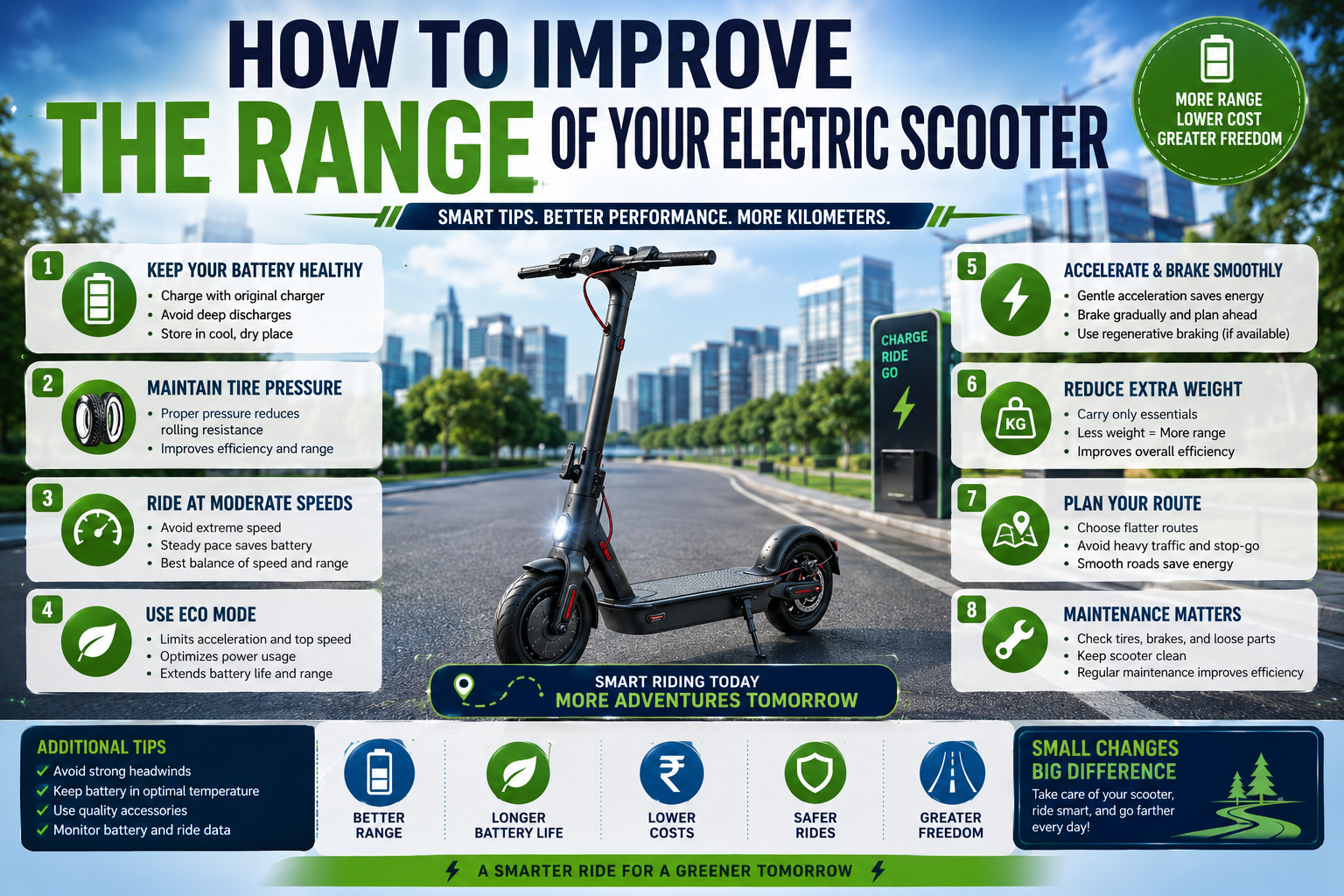
How to Improve the Range of Your Electric Scooter
Electric scooters have become one of the most popular forms of personal transportation, offering an eco-friendly, cost-effective, and convenient way to travel. Whether you use your eScooter for commuting, running errands, or weekend rides, one question often comes to mind: “How can I make my electric scooter travel farther on a single charge?”
The range of an electric scooter depends on several factors, including battery capacity, rider weight, terrain, weather conditions, riding style, and regular maintenance. While manufacturers provide an estimated maximum range, real-world performance often varies depending on how the scooter is used.
The good news is that you don’t always need a bigger battery to travel farther. By adopting smart riding habits and maintaining your scooter properly, you can maximize efficiency and get more kilometers or miles from every charge.
This guide explains the most effective ways to improve the range of your electric scooter while extending battery life and enhancing overall performance.
Why Electric Scooter Range Matters
A longer riding range provides several benefits:
- Fewer charging sessions
- Lower electricity costs
- Greater commuting flexibility
- Reduced range anxiety
- Longer battery lifespan
- Improved travel convenience
Understanding how range works helps you get the most value from your electric scooter.
What Determines Electric Scooter Range?
Several factors influence how far an electric scooter can travel.
These include:
- Battery capacity
- Motor efficiency
- Rider weight
- Tire pressure
- Terrain
- Weather conditions
- Riding speed
- Wind resistance
- Maintenance
- Road surface
Improving even a few of these factors can noticeably increase your range.
1. Keep Your Battery Healthy
The battery is the heart of your electric scooter.
To maximize battery performance:
- Charge using the original charger.
- Avoid frequent deep discharges.
- Follow the manufacturer’s charging recommendations.
- Store the scooter in a cool, dry place.
- Avoid prolonged exposure to extreme heat or cold.
A healthy battery delivers better efficiency and consistent performance over time.
2. Maintain Proper Tire Pressure
Underinflated tires create more rolling resistance, forcing the motor to work harder.
Benefits of correct tire pressure include:
- Improved efficiency
- Better handling
- Longer tire life
- Increased riding range
Check tire pressure regularly and maintain the recommended level.
3. Ride at Moderate Speeds
Higher speeds require significantly more energy.
For maximum efficiency:
- Maintain a steady cruising speed.
- Avoid unnecessary top-speed riding.
- Accelerate smoothly.
- Reduce rapid speed changes.
Moderate riding often delivers the best balance between travel time and battery consumption.
4. Use Eco Mode
Many electric scooters offer multiple riding modes.
Eco Mode limits acceleration and top speed while optimizing power consumption.
Advantages include:
- Longer range
- Lower battery usage
- Smoother riding
- Reduced motor stress
For daily commuting, Eco Mode is often the most efficient choice.
5. Accelerate Gently
Rapid acceleration draws high amounts of power from the battery.
Instead:
- Increase speed gradually.
- Maintain consistent throttle input.
- Avoid repeated hard launches.
Smooth acceleration improves overall energy efficiency.
6. Brake Smoothly
Frequent hard braking wastes momentum and requires additional energy to regain speed.
When possible:
- Anticipate traffic.
- Coast before braking.
- Maintain safe following distances.
- Ride predictably.
Some scooters also feature regenerative braking, which can recover a small amount of energy during deceleration.
7. Reduce Extra Weight
Every additional kilogram requires more energy.
To improve range:
- Carry only necessary items.
- Avoid unnecessary cargo.
- Use lightweight accessories.
Reducing weight improves efficiency, especially on hills.
8. Plan Your Route
Smart route planning can increase efficiency.
Choose roads with:
- Fewer steep hills
- Smooth pavement
- Less stop-and-go traffic
- Lower congestion
A slightly longer but flatter route may consume less battery than a shorter route with steep inclines.
9. Avoid Strong Headwinds
Wind resistance increases as speed rises.
When riding into strong winds:
- Reduce speed slightly.
- Tuck in naturally while maintaining safe posture.
- Plan rides based on weather forecasts when possible.
Less aerodynamic resistance means lower energy consumption.
10. Keep Your Scooter Clean
Dust, mud, and debris can affect moving parts and reduce efficiency.
Regular cleaning helps:
- Maintain performance
- Prevent corrosion
- Improve cooling
- Extend component life
Always avoid directing high-pressure water at electrical components.
11. Service Your Scooter Regularly
Routine maintenance ensures optimal performance.
Inspect:
- Brakes
- Tires
- Bearings
- Suspension
- Electrical connections
- Lights
A well-maintained scooter operates more efficiently and safely.
12. Protect the Battery from Extreme Temperatures
Temperature has a significant impact on battery performance.
Hot Weather
High temperatures can increase battery wear.
Cold Weather
Low temperatures temporarily reduce battery efficiency and available range.
Store and charge the scooter in moderate conditions whenever possible.
13. Use Regenerative Braking Wisely
If your scooter supports regenerative braking, it can recover a small amount of energy while slowing down.
Benefits include:
- Slight range improvement
- Reduced brake wear
- Better energy efficiency
While it won’t dramatically increase range, every bit of recovered energy helps.
14. Avoid Frequent Short Trips
Short rides often begin with a cold battery, which may operate less efficiently than one that has reached normal operating temperature.
Combining errands into a single trip can help maximize efficiency.
15. Monitor Battery Usage
Many modern scooters provide ride statistics through a mobile app or digital dashboard.
Track:
- Battery percentage
- Average speed
- Energy consumption
- Trip distance
- Riding history
Monitoring these metrics helps you identify habits that consume more energy.
Common Mistakes That Reduce Range
Avoid these common errors:
- Riding at maximum speed continuously
- Ignoring tire pressure
- Carrying excessive weight
- Skipping maintenance
- Charging with incompatible chargers
- Storing the scooter in extreme temperatures
- Aggressive acceleration and braking
- Neglecting battery care
Correcting these habits can noticeably improve performance.
Additional Tips for Longer Range
- Ride smoothly and consistently.
- Keep software updated if your scooter supports firmware updates.
- Use manufacturer-approved accessories.
- Charge the battery before it becomes completely depleted, if recommended by the manufacturer.
- Check for loose components that may create unnecessary resistance.
Small improvements can add up over time.
Frequently Asked Questions
Does riding slower increase range?
Yes. Moderate speeds generally reduce energy consumption and allow the scooter to travel farther on a single charge.
Does rider weight affect range?
Yes. Heavier loads require more power, especially during acceleration and hill climbing.
Can tire pressure improve battery life?
Proper tire pressure reduces rolling resistance, improving efficiency and helping the scooter travel farther while placing less strain on the battery.
Is Eco Mode worth using?
For most daily commuting situations, Eco Mode offers an excellent balance between performance and battery efficiency.
How often should I service my scooter?
Follow the maintenance schedule provided by the manufacturer and inspect key components regularly to maintain peak performance.
The Future of Longer-Range Electric Scooters
Battery technology continues to improve rapidly. Future electric scooters are expected to offer:
- Higher energy density batteries
- Faster charging
- Improved motor efficiency
- AI-powered energy management
- Smarter battery diagnostics
- Better regenerative braking systems
- Lightweight materials for improved efficiency
These innovations will make electric scooters capable of traveling even farther while maintaining excellent performance.
Conclusion
Improving the range of your electric scooter doesn’t always require expensive upgrades. Simple changes such as maintaining proper tire pressure, riding at moderate speeds, using Eco Mode, reducing unnecessary weight, and caring for the battery can significantly increase the distance you travel on each charge.
Regular maintenance, efficient riding habits, and thoughtful route planning not only improve range but also extend the lifespan of your scooter and reduce operating costs. By following the practical tips in this guide, you can enjoy longer rides, greater reliability, and a better overall ownership experience while making the most of every charge.