
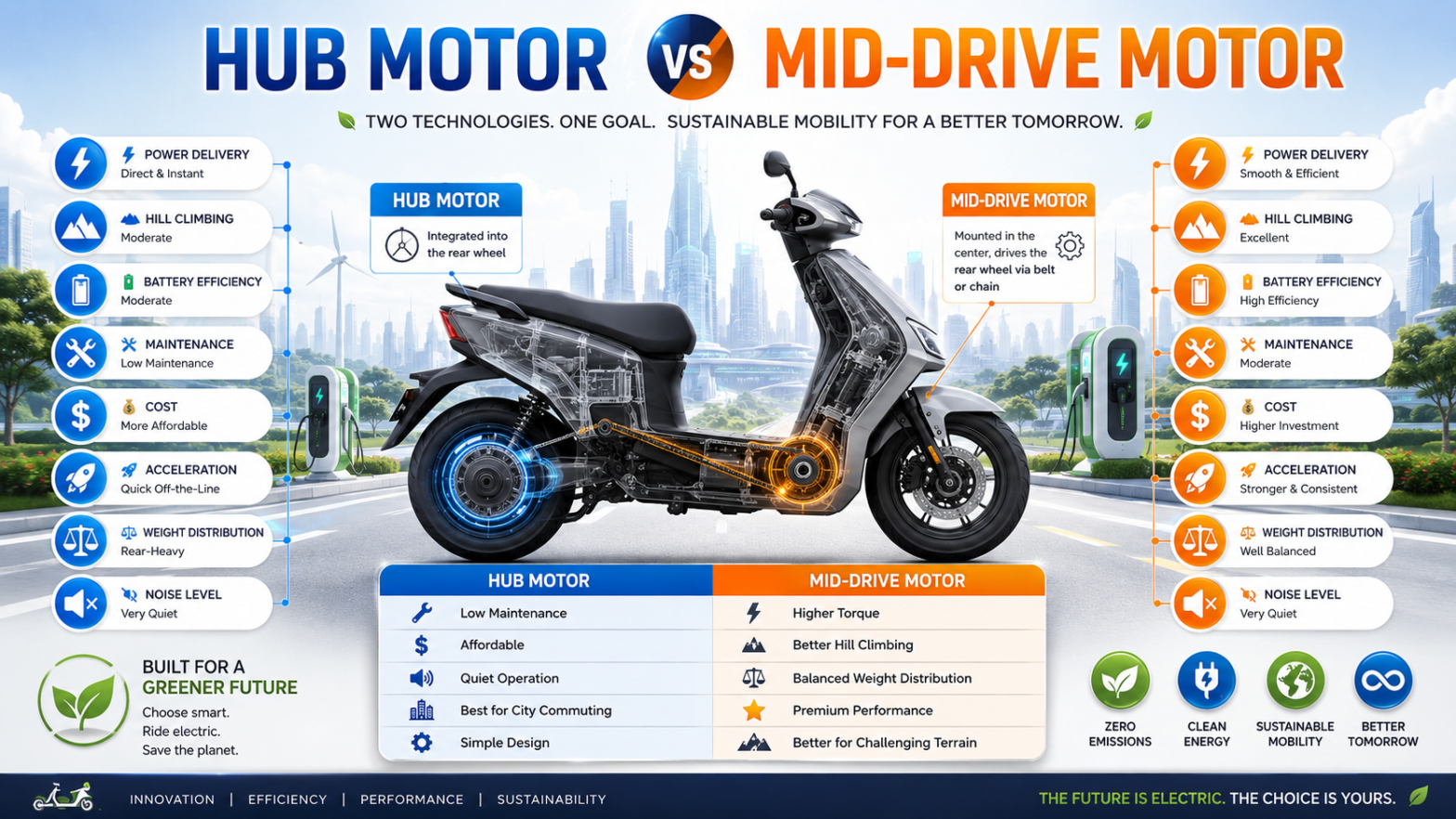
Understanding Electric Scooter Motors: Hub vs Mid-Drive
Hub Motor vs Mid-Drive Motor is one of the most important comparisons to consider when choosing the right electric scooter. Electric scooters have revolutionized urban transportation by offering an efficient, eco-friendly, and cost-effective alternative to traditional fuel-powered vehicles. While most buyers focus on battery range, charging time, and design, the motor plays a crucial role in determining how the scooter accelerates, climbs hills, handles different terrains, and delivers overall riding performance. Understanding the differences between hub motors and mid-drive motors can help you make a smarter buying decision.
When researching electric scooters, you’ll often come across two primary motor types: hub motors and mid-drive motors. Each has unique advantages and disadvantages, making them suitable for different riding styles and applications.
If you’re planning to buy your first electric scooter or upgrade to a higher-performance model, understanding how these motor systems work will help you make a smarter purchasing decision.
This complete guide explains hub motors and mid-drive motors, compares their performance, and helps you decide which option best suits your needs.
What Is an Electric Scooter Motor?
The motor is the heart of an electric scooter. It converts electrical energy stored in the battery into mechanical energy, which drives the wheels and moves the scooter forward.
Unlike petrol scooters that rely on internal combustion engines, electric scooters use electric motors that provide:
- Instant torque
- Smooth acceleration
- Quiet operation
- High energy efficiency
- Low maintenance
The location of the motor determines whether it is classified as a hub motor or a mid-drive motor.
What Is a Hub Motor?
A hub motor is installed directly inside the front or rear wheel hub. It powers the wheel without requiring a chain, belt, or additional transmission system.
Hub motors are the most common motor type found in modern electric scooters due to their simplicity and reliability.
How Hub Motors Work
When electricity flows from the battery to the controller, the hub motor rotates the wheel directly. Since the motor is built into the wheel itself, power is delivered efficiently with fewer moving parts.
Advantages of Hub Motors
- Simple design
- Quiet operation
- Low maintenance
- Fewer moving parts
- Lightweight construction
- Cost-effective manufacturing
- High reliability
- Smooth acceleration
These advantages make hub motors ideal for daily city commuting.
Disadvantages of Hub Motors
- Slightly lower efficiency on steep hills
- More weight concentrated in the wheel
- Limited torque compared to some mid-drive systems
- Wheel repairs may require additional care due to the integrated motor
What Is a Mid-Drive Motor?
A mid-drive motor is mounted near the center of the scooter’s frame, typically close to the crank or drive system. Instead of driving the wheel directly, it transfers power through a chain, belt, or gear system.
Mid-drive motors are more commonly found in premium electric motorcycles and high-performance electric bicycles, though they are becoming increasingly popular in advanced electric scooter designs.
How Mid-Drive Motors Work
The motor drives the transmission system, which then transfers power to the rear wheel. This setup allows the motor to operate more efficiently under varying loads and terrain conditions.
Advantages of Mid-Drive Motors
- Excellent hill-climbing performance
- Better weight distribution
- Higher torque output
- Improved handling
- Efficient power delivery on varied terrain
- Enhanced performance for heavy loads
Disadvantages of Mid-Drive Motors
- Higher purchase cost
- More complex mechanical system
- Additional maintenance requirements
- More moving parts
- Slightly louder operation compared to hub motors
Hub Motor vs Mid-Drive Motor: Feature Comparison
| Feature | Hub Motor | Mid-Drive Motor |
|---|---|---|
| Motor Position | Inside the wheel | Center of the frame |
| Power Delivery | Direct to the wheel | Through a drive system |
| Maintenance | Low | Moderate |
| Initial Cost | Lower | Higher |
| Hill Climbing | Good | Excellent |
| Torque | Good | Excellent |
| Weight Distribution | Wheel-focused | Balanced |
| Ride Comfort | Smooth | More dynamic |
| Efficiency on Flat Roads | Excellent | Very Good |
| Efficiency on Hills | Moderate to Good | Excellent |
| Complexity | Simple | More complex |
Performance Comparison
Acceleration
Hub motors provide quick and smooth acceleration, making them ideal for stop-and-go city traffic.
Mid-drive motors generally produce stronger acceleration under heavy loads and on steep inclines due to their efficient power transfer.
Hill Climbing
This is where mid-drive motors typically have an advantage.
By utilizing a transmission system, mid-drive motors maintain better torque and efficiency while climbing hills.
Hub motors perform well on moderate inclines but may experience reduced efficiency on steeper gradients, depending on motor power.
Battery Efficiency
Battery performance depends on many factors, including:
- Rider weight
- Terrain
- Riding style
- Motor size
- Controller programming
On flat roads, hub motors are highly efficient.
On hilly terrain, mid-drive motors often use energy more efficiently because they maintain optimal motor speed through their drive system.
Maintenance Requirements
Hub Motors
Maintenance is generally limited to:
- Tire replacement
- Bearing inspection
- Electrical connections
Since there are fewer moving parts, maintenance costs remain relatively low.
Mid-Drive Motors
Additional components require periodic inspection, including:
- Drive belts or chains
- Gears
- Tension systems
- Bearings
While still reliable, they require more attention than hub motors.
Ride Quality
Hub Motor Ride
- Smooth
- Quiet
- Comfortable
- Ideal for city commuting
Mid-Drive Ride
- Powerful
- Responsive
- Balanced
- Better for varied terrain and performance-focused riders
Which Motor Lasts Longer?
Both motor types can provide many years of dependable service when properly maintained.
Hub motors often have an advantage in longevity because of their simpler construction and fewer moving parts.
Mid-drive motors also offer excellent durability but benefit from regular maintenance of the drive system.
Cost Comparison
Hub Motors
Typically found in:
- Entry-level electric scooters
- Mid-range commuter models
Lower manufacturing costs make hub motor scooters more affordable.
Mid-Drive Motors
Usually available in:
- Premium scooters
- High-performance models
The additional engineering and components generally increase the purchase price.
Best Motor for Different Riders
Hub Motor Is Best For
- Daily commuting
- Beginners
- Urban riders
- Budget-conscious buyers
- Low-maintenance ownership
- Flat or moderately hilly roads
Mid-Drive Motor Is Best For
- Performance enthusiasts
- Riders in hilly regions
- Heavy-duty use
- Frequent long-distance riders
- Premium scooter buyers
- Riders seeking maximum torque and handling
Common Myths About Electric Scooter Motors
Myth 1: Bigger Motor Always Means Better Performance
Motor power is important, but battery capacity, controller tuning, vehicle weight, and overall design also play major roles in performance.
Myth 2: Hub Motors Wear Out Quickly
Modern hub motors are designed for long service life and require very little maintenance when used correctly.
Myth 3: Mid-Drive Motors Always Use Less Battery
Efficiency depends on riding conditions. Mid-drive motors often excel on hills, while hub motors can be equally or more efficient on flat urban roads.
Maintenance Tips for Both Motor Types
- Keep the scooter clean.
- Avoid water entering electrical components.
- Inspect wiring regularly.
- Follow the manufacturer’s service schedule.
- Monitor unusual noises or vibrations.
- Avoid overloading the scooter.
- Maintain correct tire pressure.
- Keep the battery in good condition.
Proper maintenance helps maximize motor lifespan regardless of the type.
Frequently Asked Questions
Which motor is better for city commuting?
Hub motors are generally the preferred choice for city commuting due to their simplicity, quiet operation, affordability, and low maintenance.
Are mid-drive motors faster?
Top speed depends on the scooter’s design and power output rather than the motor type alone. Mid-drive motors typically offer stronger torque and hill-climbing ability rather than significantly higher top speeds.
Which motor requires less maintenance?
Hub motors require less maintenance because they have fewer moving parts and no external drive system.
Can hub motors climb hills?
Yes. Most modern hub motors can handle moderate hills effectively. Performance on steeper inclines depends on motor power, rider weight, and battery capacity.
Which motor lasts longer?
Both can last for many years with proper care. Hub motors often have an advantage due to their simpler mechanical design.
Conclusion
Choosing between a hub motor and a mid-drive motor depends on how and where you plan to ride. Hub motors are an excellent choice for daily commuting, offering simplicity, affordability, quiet operation, and low maintenance. They are perfect for urban riders seeking a reliable and efficient transportation solution.
Mid-drive motors, on the other hand, deliver exceptional torque, improved hill-climbing performance, and better weight distribution, making them ideal for riders who frequently travel on challenging terrain or prioritize performance.
Before purchasing an electric scooter, consider your daily commute, road conditions, budget, and maintenance preferences. Understanding the strengths and limitations of each motor type will help you select a scooter that meets your needs and provides years of dependable, enjoyable riding.