
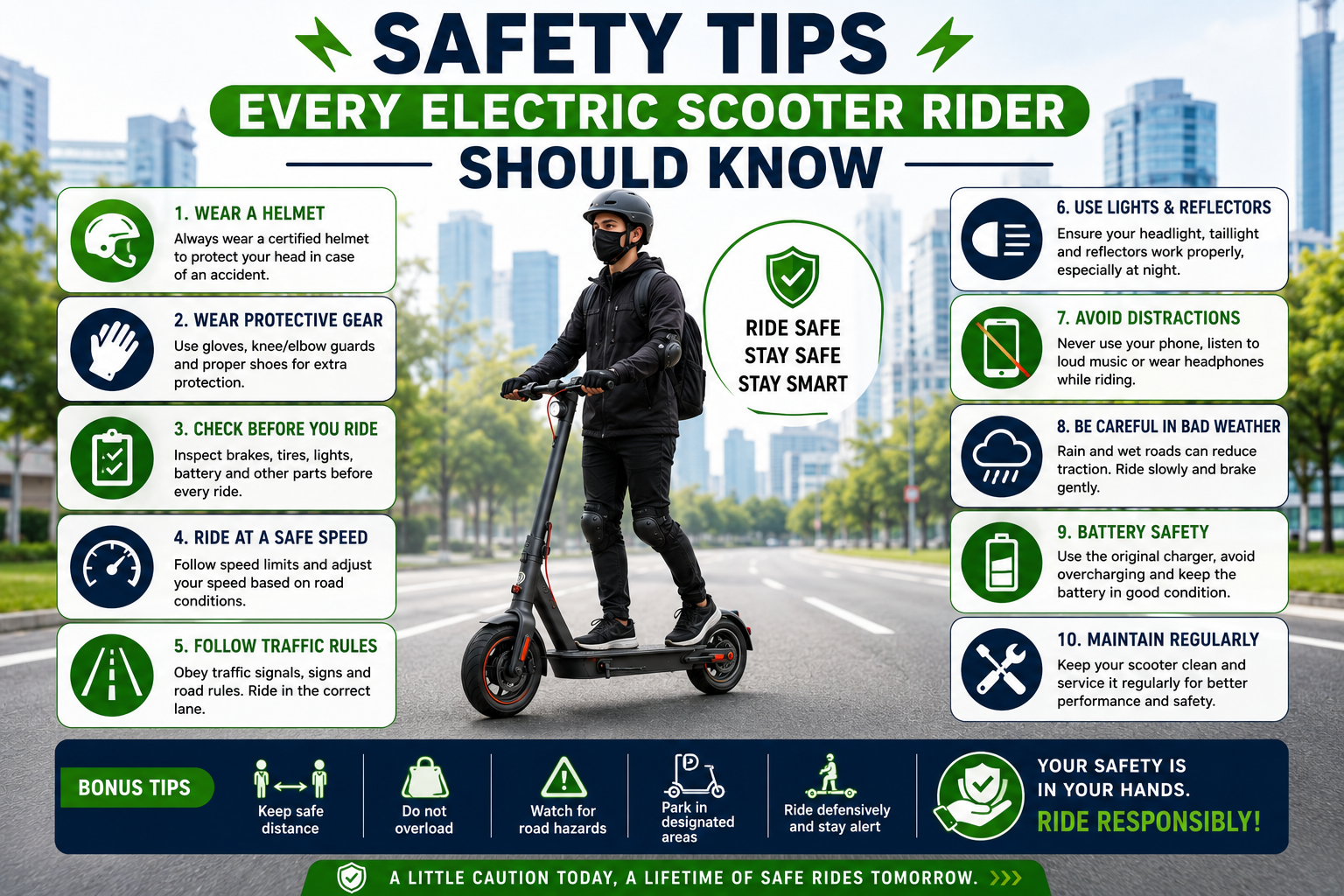
Safety Tips Every Electric Scooter Rider Should Know
Electric scooters have transformed the way people travel in cities. They are affordable, eco-friendly, easy to ride, and perfect for daily commuting. As more riders choose electric scooters for work, school, and everyday travel, understanding safe riding practices has become more important than ever.
While modern electric scooters come equipped with advanced safety features such as LED lighting, powerful braking systems, and intelligent battery management, rider behavior remains the biggest factor in preventing accidents. Whether you are a beginner or an experienced rider, following basic safety guidelines can significantly reduce risks and make every journey more enjoyable.
This comprehensive guide covers the most important safety tips every electric scooter rider should know, helping you ride confidently while protecting yourself and others on the road.
Why Electric Scooter Safety Tips Matters
Electric scooters are capable of reaching speeds that require responsible riding and quick decision-making. Even a short trip can become dangerous if proper precautions are ignored.
Safe riding helps you:
- Prevent accidents
- Protect yourself and passengers
- Increase confidence
- Extend your scooter’s lifespan
- Reduce repair costs
- Comply with local traffic regulations
Good safety habits benefit everyone on the road.
1. Always Wear a Helmet
A helmet is the single most important piece of safety equipment for any electric scooter rider.
Choose a helmet that:
- Fits properly
- Meets recognized safety standards
- Has good ventilation
- Includes a secure chin strap
Even at moderate speeds, a helmet greatly reduces the risk of serious head injuries.
2. Wear Protective Gear
Additional protective equipment provides extra safety.
Recommended gear includes:
- Gloves
- Knee guards
- Elbow guards
- Closed-toe shoes
- Reflective jacket or vest (especially at night)
Protective gear can reduce injuries in the event of a fall.
3. Inspect Your Scooter Before Every Ride
A quick inspection takes only a few minutes.
Check:
- Battery level
- Tire pressure
- Brake function
- Lights
- Indicators
- Mirrors (if equipped)
- Suspension
- Loose bolts
Identifying small issues early helps prevent larger problems.
4. Learn Your Scooter’s Controls
Before riding in traffic, become familiar with:
- Throttle
- Brakes
- Riding modes
- Horn
- Headlights
- Turn indicators
- Display panel
Practice operating these controls in a safe, open area before using the scooter on busy roads.
5. Follow Traffic Rules
Electric scooter riders should obey the same traffic rules as other road users whenever applicable.
Always:
- Stop at traffic signals.
- Follow speed limits.
- Yield where required.
- Use designated lanes when available.
- Respect pedestrian crossings.
Responsible riding improves safety for everyone.
6. Ride at a Safe Speed
Higher speeds reduce reaction time and increase stopping distance.
Adjust your speed according to:
- Road conditions
- Traffic
- Weather
- Visibility
- Pedestrian activity
Riding within your comfort level is always the safest approach.
7. Maintain a Safe Following Distance
Avoid riding too close to other vehicles.
Keeping a safe distance gives you more time to react to:
- Sudden braking
- Obstacles
- Road hazards
- Unexpected traffic movements
Defensive riding helps prevent collisions.
8. Use Lights and Reflectors
Visibility is essential, especially during:
- Night riding
- Rain
- Fog
- Early morning
- Evening
Ensure that:
- Headlights work properly.
- Taillights are bright.
- Reflectors are clean.
- Turn indicators function correctly.
Being seen is just as important as seeing the road.
9. Avoid Using Mobile Phones While Riding
Distractions significantly increase accident risk.
Never:
- Text while riding
- Browse your phone
- Watch videos
- Hold a phone in one hand while steering
If you need navigation, mount your phone securely and use voice guidance where possible.
10. Watch for Road Hazards
Electric scooters have smaller wheels than many other vehicles, making them more sensitive to uneven surfaces.
Be alert for:
- Potholes
- Gravel
- Sand
- Wet leaves
- Oil spills
- Speed bumps
- Construction zones
Slow down when approaching unfamiliar road conditions.
11. Be Extra Careful in Wet Weather
Rain reduces traction and increases braking distance.
During wet conditions:
- Ride more slowly.
- Brake gently.
- Avoid standing water.
- Increase following distance.
- Wear waterproof gear.
If heavy rain or flooding occurs, consider postponing your ride.
12. Charge the Battery Safely
Battery safety is just as important as riding safety.
Best practices include:
- Use the original charger.
- Charge in a dry, ventilated area.
- Avoid charging near flammable materials.
- Inspect charging cables regularly.
- Never use damaged chargers.
Proper charging protects both the battery and the rider.
13. Don’t Overload the Scooter
Every scooter has a recommended maximum weight capacity.
Exceeding this limit may affect:
- Braking performance
- Stability
- Motor efficiency
- Battery range
- Suspension
Always follow the manufacturer’s weight recommendations.
14. Keep Both Hands on the Handlebars
Maintain full control of the scooter by keeping both hands on the handlebars unless signaling where legally appropriate and safe.
Avoid carrying heavy bags that interfere with steering.
15. Schedule Regular Maintenance
Routine maintenance ensures your scooter remains safe and reliable.
Regularly inspect:
- Tires
- Brakes
- Suspension
- Battery
- Lights
- Electrical connections
- Steering components
Professional servicing helps identify hidden issues before they become serious.
Common Mistakes Riders Should Avoid
Many accidents result from avoidable errors.
Avoid:
- Riding without a helmet
- Speeding
- Sudden braking
- Ignoring maintenance
- Using mobile phones
- Carrying excessive loads
- Riding under the influence of alcohol or drugs
- Ignoring warning lights
Good habits greatly improve safety.
Safety Tips for New Riders
If you’re just starting:
- Practice in an open area.
- Learn smooth acceleration and braking.
- Gain confidence before riding in heavy traffic.
- Avoid high speeds initially.
- Familiarize yourself with your scooter’s controls and features.
Building experience gradually leads to safer riding.
Emergency Preparedness
Carry a few essentials when riding:
- Fully charged phone
- Emergency contact information
- Small first-aid kit (if practical)
- Portable tire inflator (for longer rides)
- Basic repair tools if recommended by the manufacturer
Being prepared can make unexpected situations easier to manage.
Frequently Asked Questions
Is wearing a helmet necessary?
Yes. A properly fitted helmet is strongly recommended for every ride and is required by law in some areas.
Can I ride my electric scooter in the rain?
Many electric scooters are designed to handle light rain, but you should always follow the manufacturer’s recommendations and avoid deep water or flooded roads.
How often should I inspect my scooter?
Perform a quick safety check before every ride and schedule professional servicing according to the manufacturer’s maintenance schedule.
Why is tire pressure important?
Correct tire pressure improves handling, braking, battery efficiency, and overall safety.
Can beginners safely ride electric scooters?
Yes. Electric scooters are generally easy to learn, but beginners should practice in a safe area and become comfortable with the controls before riding in traffic.
Conclusion
Electric scooters offer a convenient, economical, and environmentally friendly way to travel, but safe riding should always be your top priority. Wearing protective gear, following traffic rules, maintaining your scooter, riding at appropriate speeds, and staying alert to road conditions all contribute to a safer and more enjoyable experience.
By developing responsible riding habits and performing regular maintenance, you can reduce risks, extend your scooter’s lifespan, and confidently enjoy the many benefits of electric mobility. Whether you’re commuting to work or exploring your city, prioritizing safety ensures every journey is smooth, reliable, and enjoyable.