
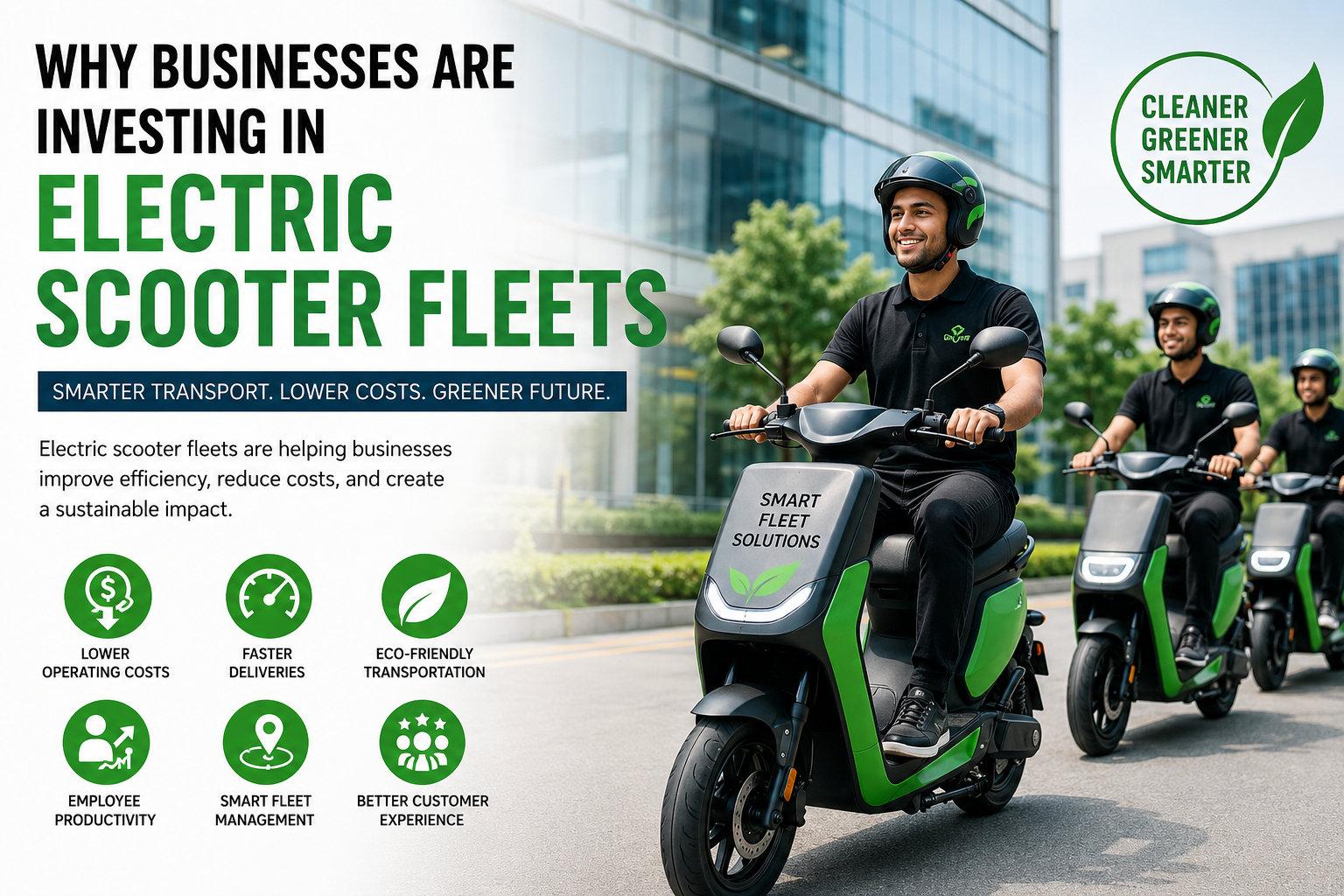
Why Businesses Are Investing in Electric Scooter Fleets
The transportation industry is changing faster than ever before. Rising fuel prices, increasing traffic congestion, environmental regulations, and the demand for faster last-mile delivery have encouraged businesses to rethink how they move people and products. One solution has quickly emerged as a game changer: electric scooter fleets.
From food delivery companies and logistics providers to universities, corporate campuses, resorts, hotels, warehouses, and government organizations, businesses worldwide are investing heavily in electric scooters. These vehicles offer an affordable, sustainable, and efficient alternative to traditional transportation while helping organizations reduce operating costs and improve productivity.
Electric scooters are no longer viewed as a consumer convenience—they have become an essential business asset.
This article explores why companies are making the switch, the industries benefiting the most, and how electric scooter fleets are shaping the future of business mobility.
The Rise of Electric Mobility
Electric mobility has experienced explosive growth over the past decade. Governments across the globe are encouraging cleaner transportation through incentives, subsidies, and stricter emission regulations.
Businesses have recognized that transitioning to electric vehicles isn’t just about protecting the environment—it’s also about improving operational efficiency.
Electric scooter fleets provide companies with:
- Lower transportation costs
- Reduced maintenance expenses
- Better employee mobility
- Faster customer service
- Sustainable business practices
- Stronger brand reputation
As battery technology continues to improve, electric scooters are becoming more reliable, longer-lasting, and capable of handling demanding business operations.
Lower Operating Costs
One of the biggest reasons businesses invest in electric scooter fleets is cost savings.
Traditional fuel-powered vehicles require:
- Petrol or diesel
- Frequent engine servicing
- Oil changes
- Transmission maintenance
- Expensive repairs
- Higher insurance costs
Electric scooters eliminate many of these expenses.
Businesses save money through:
- Low electricity costs
- Fewer moving mechanical parts
- Reduced servicing requirements
- Lower maintenance bills
- Longer component lifespan
For companies operating dozens—or even hundreds—of vehicles, these savings quickly add up to thousands of dollars each year.
Many businesses report recovering their fleet investment within just a few years through reduced operating expenses.
Faster Last-Mile Delivery
Last-mile delivery has become one of the most competitive areas of modern business.
Customers now expect:
- Same-day delivery
- One-hour delivery
- Instant grocery delivery
- Fast food delivery
- Medical deliveries
Electric scooters excel in urban environments where traffic often delays larger vehicles.
They can:
- Navigate narrow streets
- Avoid traffic congestion
- Park easily
- Reach customers faster
- Reduce delivery times
This makes electric scooters ideal for:
- Restaurants
- Grocery stores
- Courier companies
- E-commerce businesses
- Pharmacies
- Parcel services
Speed translates directly into better customer satisfaction and increased profits.
Reduced Fuel Dependency
Fuel prices fluctuate regularly, making transportation costs unpredictable.
Electric scooters help businesses reduce dependence on fossil fuels.
Charging an electric scooter typically costs only a fraction of refueling a petrol vehicle.
This allows businesses to:
- Predict transportation expenses
- Reduce operating budgets
- Improve long-term financial planning
- Minimize exposure to fuel price increases
For fleet managers, stable operating costs are a major advantage.
Supporting Sustainability Goals
Consumers increasingly support environmentally responsible businesses.
Companies investing in electric scooter fleets demonstrate their commitment to reducing carbon emissions.
Environmental benefits include:
- Zero tailpipe emissions
- Reduced air pollution
- Lower carbon footprint
- Less noise pollution
- Improved urban sustainability
Many organizations now include electric mobility initiatives in their Environmental, Social, and Governance (ESG) strategies.
A greener fleet enhances both environmental impact and public perception.
Improved Employee Productivity
Large facilities often require employees to travel considerable distances throughout the day.
Examples include:
- Manufacturing plants
- Warehouses
- Airports
- Universities
- Business parks
- Resorts
- Industrial campuses
Electric scooters help employees move quickly between buildings, departments, and workstations.
Benefits include:
- Less walking time
- Faster inspections
- Improved maintenance response
- Higher productivity
- Reduced employee fatigue
Instead of spending valuable time walking across large campuses, workers can complete more tasks efficiently.
Perfect for Corporate Campuses
Many technology companies now use electric scooters internally.
Large office campuses may span several acres.
Employees frequently travel between:
- Office buildings
- Meeting rooms
- Parking areas
- Cafeterias
- Data centers
- Visitor centers
Scooters significantly reduce travel time and improve workplace efficiency.
Tourism and Hospitality Applications
Hotels, resorts, and recreational facilities are rapidly adopting electric scooter fleets.
Guests appreciate convenient transportation across large properties.
Common uses include:
- Beach resorts
- Theme parks
- Golf resorts
- Eco-tourism destinations
- Holiday villages
- Camping sites
Benefits for hospitality businesses include:
- Better guest experiences
- Premium transportation services
- Reduced reliance on golf carts
- Eco-friendly branding
Many resorts now offer electric scooter rentals as an additional revenue stream.
Cost-Effective Fleet Expansion
Compared to purchasing cars or vans, electric scooters require significantly lower investment.
Businesses can build larger fleets with smaller budgets.
This enables startups and small businesses to compete more effectively.
Lower acquisition costs mean companies can:
- Expand delivery coverage
- Increase operational capacity
- Add more vehicles without excessive capital investment
Smart Fleet Management Technology
Modern electric scooter fleets include advanced digital management systems.
Fleet software provides:
- GPS tracking
- Battery monitoring
- Theft protection
- Usage analytics
- Route optimization
- Maintenance scheduling
- Rider behavior monitoring
Managers gain complete visibility into fleet operations through mobile apps and cloud dashboards.
Real-time insights improve efficiency while reducing downtime.
Growing Government Support
Many governments encourage businesses to adopt electric mobility through:
- Tax incentives
- Purchase subsidies
- Charging infrastructure support
- Green transportation grants
- Environmental compliance programs
These incentives reduce the overall cost of fleet adoption, making electric scooters even more attractive for businesses.
Better Urban Mobility
Cities continue to experience worsening traffic congestion.
Electric scooters solve several urban transportation challenges:
- Easier parking
- Faster commuting
- Less road congestion
- Improved accessibility
- Lower infrastructure demands
Businesses operating in crowded metropolitan areas benefit from quicker travel and greater flexibility.
Lower Maintenance Requirements
Electric scooters contain far fewer moving parts than internal combustion vehicles.
This results in:
- Fewer breakdowns
- Less downtime
- Simpler servicing
- Lower repair costs
- Longer operational life
Fleet operators appreciate predictable maintenance schedules and improved vehicle reliability.
Ideal for Warehouse Operations
Warehouses continue growing larger due to increased e-commerce demand.
Employees often need to cover long distances while:
- Performing inspections
- Transporting documents
- Supervising operations
- Managing inventory
- Conducting maintenance
Electric scooters improve internal mobility without generating emissions inside facilities.
This creates a cleaner and more efficient work environment.
Enhanced Customer Experience
Speed and convenience directly affect customer satisfaction.
Electric scooter fleets enable businesses to:
- Deliver faster
- Respond quickly to service requests
- Improve appointment punctuality
- Increase service availability
Customers notice faster response times, leading to stronger loyalty and positive reviews.
Strong Return on Investment (ROI)
Although electric scooters require an initial investment, businesses often experience excellent long-term returns.
Savings come from:
- Fuel reduction
- Lower maintenance
- Higher productivity
- Reduced labor costs
- Faster deliveries
- Better fleet utilization
As fleet sizes increase, these savings become even more substantial.
Many organizations achieve a positive return on investment within two to four years, depending on usage.
Employee Satisfaction
Employees appreciate transportation tools that make their jobs easier.
Electric scooters reduce:
- Physical strain
- Walking distances
- Travel time
- Daily fatigue
Improved mobility contributes to a better workplace experience and can increase job satisfaction.
Industries Benefiting from Electric Scooter Fleets
Electric scooters are transforming operations across many sectors.
Logistics and Courier Services
Fast, efficient parcel delivery in urban areas.
Food Delivery
Quick transportation for restaurants and delivery partners.
Retail
Inventory movement and customer delivery services.
Healthcare
Medical campuses, hospital transport, and pharmacy deliveries.
Manufacturing
Large factories benefit from improved employee mobility.
Hospitality
Resorts and hotels offer guest transportation.
Education
Universities and schools use scooters for campus operations.
Government
Municipal services and inspections become faster and more environmentally friendly.
Corporate Offices
Large campuses improve employee movement and operational efficiency.
Challenges Businesses Should Consider
Despite numerous advantages, organizations should carefully plan fleet implementation.
Potential considerations include:
- Charging infrastructure
- Battery replacement schedules
- Employee safety training
- Local regulations
- Insurance requirements
- Fleet security
- Weather conditions
Proper planning ensures businesses maximize fleet performance and minimize operational risks.
Future Trends in Electric Scooter Fleets
The next generation of business scooter fleets will include even more advanced technology.
Emerging innovations include:
- AI-powered fleet optimization
- Predictive maintenance
- Swappable battery systems
- IoT connectivity
- Autonomous fleet diagnostics
- Solar-powered charging stations
- Enhanced safety systems
- Improved battery range
As technology advances, electric scooters will become even more efficient and cost-effective for commercial use.
Why Businesses Should Invest Now
Companies delaying fleet electrification may miss significant competitive advantages.
Early adopters benefit from:
- Lower operating expenses
- Stronger sustainability credentials
- Better customer satisfaction
- Faster service delivery
- Higher employee productivity
- Reduced environmental impact
Electric scooters represent more than a transportation upgrade—they are a strategic investment in operational excellence and long-term business growth.
Conclusion
Electric scooter fleets are reshaping how businesses operate in today’s fast-paced world. Whether improving last-mile delivery, reducing transportation costs, supporting sustainability goals, or increasing employee productivity, electric scooters offer practical benefits across nearly every industry.
As battery technology improves, charging infrastructure expands, and businesses continue prioritizing efficiency, the adoption of electric scooter fleets will only accelerate. Companies that embrace this transition today are positioning themselves for lower costs, greater flexibility, and a stronger competitive edge in the years ahead.
For organizations seeking smarter, cleaner, and more economical transportation solutions, investing in an electric scooter fleet is no longer just an innovative idea—it’s a strategic move toward the future of business mobility.